West Bank Lockdown Threatens Wider Escalation as US-Iran Tensions Reach Critical Point
2026-10-24 03:14:48
Tensions across the Middle East have intensified sharply after a deadly gunfight near Hebron in the occupied West Bank left two Israeli soldiers and two Palestinian gunmen dead. The incident has prompted Israeli Prime Minister Benjamin Netanyahu to order preparations for a wider security operation and a possible full closure of the West Bank.
Read More
India’s Middle East Oil Imports Rebound as Hormuz Shipments Recover
2026-10-23 05:04:30
India’s crude oil imports from the Middle East surged to around 2.8 million barrels per day in September, returning to pre-war levels as oil shipments through the Strait of Hormuz increased.
Read More
U.S. Economy and Stock Market Show Strong Momentum Ahead of Midterm Elections
2026-10-22 17:08:47
As the United States approaches the November midterm elections, the country is entering the crucial political season against a backdrop of strong economic and financial performance under President Donald Trump
Read More
U.S. Orders Diplomatic Departure from Saudi Arabia Amid Rising Regional Threats
2026-10-22 08:07:36
The United States has ordered its diplomats to leave Saudi Arabia as security concerns intensify following a reported surge in Houthi attacks targeting facilities across the kingdom and the wider Middle East. Washington is also assessing potential diplomatic withdrawals from the United Arab Emirates, Jordan, Qatar and Bahrain amid fears that the violence could spread further
Read More
Russia Signals Return to U.S.-Mediated Ukraine Talks as Fighting Continues
2026-10-22 05:18:55
Russia has signaled its readiness to resume U.S.-mediated peace negotiations with Ukraine next month.
Read More
U.S.–India Trade Talks Near a New Breakthrough
2026-10-22 05:16:12
Washington and New Delhi appear to be moving closer to a new bilateral trade agreement, with U.S. officials signaling that the emerging framework could look significantly different from earlier proposals
Read More
China Expands Strategic Infrastructure Near Pangong Tso
2026-10-21 06:08:50
China is continuing to strengthen its infrastructure around Pangong Tso in eastern Ladakh, raising fresh strategic concerns for India along the Line of Actual Control
Read More
Saudi Arabia, Turkey and Pakistan Move Ahead With New Defence Alliance
2026-10-21 05:58:56
Saudi Arabia, Turkey and Pakistan are moving to strengthen a new trilateral defence framework as security tensions continue to rise across the Middle East
Read More
Middle East Tensions Escalate as Iran-Linked Attacks Target U.S. Interests
2026-10-20 03:58:34
Tensions across the Middle East have intensified following a series of attacks reportedly linked to Iran and its regional allies, with several American-linked commercial and business interests coming under threat in different parts of the region
Read More
Trump Eases Pressure on Russia, Drawing Sharp Criticism From Zelenskyy
2026-10-20 03:02:06
President Donald Trump has backed away from planned sanctions and tariff measures targeting Russia, citing concerns over energy supplies and the potential impact of further pressure on global markets
Read More
Houthi Attack on Yemeni Military Training Camp Leaves Dozens Dead
2026-10-20 02:55:19
At least 50 people were killed in a Houthi attack on a military training facility operated by Yemen’s internationally recognized government
Read More
Trump Warns France Unrest Could Serve as a Warning for America
2026-10-19 17:19:34
WASHINGTON — U.S. President Donald Trump has expressed concern over the growing unrest in France, pointing to the violence, looting and clashes in several French cities as a warning
Read More
Trump Endorses Netanyahu Ahead of Israel's Crucial Election
2026-10-19 05:09:01
WASHINGTON — U.S. President Donald Trump has thrown his support behind Israeli Prime Minister Benjamin Netanyahu ahead of Israel's parliamentary election on October 27,
Read More
France Rocked by Nationwide Unrest as Protest Arrests Surpass 1,800
2026-10-19 04:36:44
PARIS — France is facing one of its most serious waves of street unrest in recent years, after protests that began among students over school conditions expanded into a broader national movement driven by anger over the rising cost of living and growing inequality
Read More
Kyiv-Washington Tensions Rise as Ukraine Resumes Strikes on Russian Oil Facilities
2026-10-16 06:16:56
KYIV —Relations between Ukraine and the United States have come under renewed strain after a reported diesel agreement between Washington and Moscow, with Ukrainian President Volodymyr Zelenskyy voicing deep frustration over the development
Read More
Jantar Mantar No Longer a Designated Protest Venue in Delhi
2026-10-14 08:50:01
Delhi Police has reportedly withdrawn Jantar Mantar’s status as a designated protest site, redirecting demonstrations to three alternative locations in the national capital
Read More
IMF Raises India’s 2026 Growth Forecast to 7%
2026-10-13 17:03:55
New Delhi, October 13, 2026: The International Monetary Fund (IMF) has raised India’s economic growth forecast to 7% for 2026, signalling continued momentum in one of the world’s major economies
Read More
L. Murugan Seeks to Quit Union Cabinet
2026-10-13 16:59:58
New Delhi, October 13, 2026: Union Minister of State L. Murugan has reportedly written to Prime Minister Narendra Modi seeking to leave the Union Cabinet and return to grassroots politics
Read More
Opposition March Towards Supreme Court Puts Election Transparency in Focus
2026-10-13 07:02:54
New Delhi | October 13, 2026
A political protest in New Delhi has brought renewed attention to allegations of voter deletions and electoral irregularities in the Special Intensive Revision (SIR) exercise.
Led by Rahul Gandhi and other leaders of the INDIA bloc, thousands of protesters reportedly marched towards the Supreme Court, demanding the resignation of Chief Election Commissioner Gyanesh Kumar. The opposition has raised concerns over the alleged exclusion of voters
Read More
Supreme Court Steps In: No Illegal Detention of Peaceful Protesters, Delhi Told to Restore Free Movement
2026-10-11 10:17:19
NEW DELHI, October 11, 2026
India’s Supreme Court has directed authorities to prevent illegal detention of peaceful protesters and ensure the free movement of people in Delhi amid escalating demonstrations against Chief Election Commissioner Gyanesh Kumar. The court’s intervention follows widespread detentions and security restrictions imposed during protests organised by the Cockroach Janata Party (CJP).
Read More
Missile Attack on Riyadh Airport Kills 12, Hundreds Injured
2026-10-11 10:02:13
RIYADH, October 11, 2026
A deadly missile attack on Saudi Arabia’s King Khalid International Airport in Riyadh has killed at least 12 people and injured more than 300, marking a major escalation in the region’s widening conflict
Read More
Modi Visits Chennai to Launch Metro Phase 2 and Development Projects
2026-10-11 06:06:44
CHENNAI, October 11, 2026
Prime Minister Narendra Modi is in Chennai to launch a section of the Chennai Metro Rail Phase 2 project alongside Tamil Nadu Chief Minister C. Joseph Vijay. The programme also features several development initiatives aimed at strengthening the state’s transport infrastructure and economic connectivity
Read More
Trump Calls for New Ukrainian President Amid Russia Diesel Deal Dispute
2026-10-11 06:00:42
WASHINGTON, October 11, 2026
US President Donald Trump has called for new leadership in Ukraine, escalating tensions with President Volodymyr Zelenskyy over Washington’s controversial diesel supply agreement involving Russia
Read More
Trump Turns to Russia for Diesel as US Fuel Prices Surge 71%, Raising Fears Over Ukraine War Funding
2026-10-10 11:36:04
WASHINGTON, October 10, 2026
American farmers, truck drivers and businesses are facing mounting pressure as diesel prices soar, prompting President Donald Trump to strike a controversial fuel supply deal with Russian President Vladimir Putin.
US diesel prices have climbed by around 70% since the US-Israeli war with Iran began in February, reaching approximately $6.28 per gallon in early October, compared with about $3.68 a year earlier. Rising fuel costs are increasing transportation expenses, putting pressure on agricultural production and threatening to push food prices higher
Read More
US EXECUTION LIVESTREAM CLAIM SPARKS CONTROVERSY
2026-10-09 17:02:55
October 9, 2026 — Nidal Malik Hasan, the former US Army psychiatrist convicted of killing 13 people in the 2009 Fort Hood shooting in Texas, remains at the centre of renewed debate over military justice and capital punishment. Claims that his planned execution will be livestreamed have drawn attention, but the livestream announcement and execution schedule require independent confirmation
Read More
TRUMP’S IMMIGRATION CRACKDOWN RAISES CONCERNS FOR INDIAN IT WORKERS
2026-10-09 16:52:53
October 9, 2026 | The Bharatio Times
US President Donald Trump’s administration has reportedly suspended employment-based green-card processing for eight major technology companies, including TCS, Infosys, Wipro and HCLTech
Read More
TRUMP SOFTENS IRAN RHETORIC, BUT US PRESSURE OVER STRAIT OF HORMUZ CONTINUES
2026-10-09 13:31:01
October 9, 2026— US President Donald Trump appears to be signalling a shift towards diplomacy with Iran
Read More
TRUMP SIGNALS PAUSE IN IRAN STRIKES BEFORE US MIDTERM ELECTIONS
2026-10-09 06:58:54
US President Donald Trump has reportedly said Washington will not launch strikes against Iran before the November 3, 2026, midterm elections
Read More
INDIA Bloc Escalates Protest Against Election Chief
2026-10-07 06:11:59
Opposition INDIA bloc leaders led by Rahul Gandhi and Priyanka Gandhi Vadra took their campaign against the Election Commission to the streets of New Delhi, marching from Parliament towards the poll panel’s headquarters
Read More
Tanker Hit in Strait of Hormuz, Five Indians Rescued Safely
2026-10-04 13:14:26
A Kuwait-flagged crude oil tanker,MT Kazimah III, was struck by an unidentified projectile while transiting the strategically important Strait of Hormuz, raising fresh concerns over the safety of commercial shipping in the region. The identity of the projectile and the party responsible for the incident have not been established
Read More
Argentina Plans ‘Golden Passport’ Scheme
2026-10-04 09:54:24
Argentina is considering a “golden passport” programme that could offer citizenship to wealthy foreigners who make a $350,000 contribution to the national treasury or invest $800,000 in government bonds. The proposal aims to attract foreign capital while giving eligible investors a potential pathway to Argentine citizenship.
Read More
Brazil Heads for a Tight Presidential Vote
2026-10-04 08:57:17
Brazil is heading toward a high-stakes presidential election as President Luiz Inácio Lula da Silva and conservative challenger Flávio Bolsonaro wrap up their final campaigns
Read More
SECURITY TEST AFTER FLYDUBAI PLANE INCIDENT
2026-10-03 05:37:09
Yes—there is a serious security concern after the September 30, 2026 Flydubai incident involving a flight bound for Tel Aviv, but it is not yet established that Israel will carry out military retaliation. Investigators are still determining the attacker’s motive and whether anyone else was involved
Read More
US Pressures France and Germany to Release Diesel Reserves
2026-10-02 15:22:35
The United States is pressing France and Germany to release emergency diesel reserves as soaring fuel prices put pressure on consumers and businesses worldwide. Washington has warned that it could restrict US diesel exports if European allies do not help increase supplies
Read More
UAE Suspends Iranian Airline Flights
2026-09-30 04:18:52
The UAE has suspended flights operated by Iranian airlines to and from the country until further notice
Read More
Hormuz Crisis Puts Global Economy Under Pressure, But U.S. Faces a Different Risk
2026-09-28 20:06:07
The prolonged disruption around the Strait of Hormuz is sending another shock through global energy markets. Brent crude climbed above $107 a barrel on September 28, as efforts to reopen the strategic waterway remained stalled.
For the United States, the danger is less about a direct shortage of imported oil and more about **higher global energy prices**. Expensive crude can push up fuel, transport and production costs, increasing inflation and putting pressure on household spending and economic growth
Read More
India Bank Strike Deferred After Key Assurances
2026-09-28 05:31:44
India’s proposed three-day nationwide bank strike from September 28 to 30 has been deferred after the Indian Banks’ Association and the United Forum of Bank Unions reached an understanding late Sunday
Read More
Trump Rejects Iran’s Hormuz Proposal as Tehran Keeps Diplomacy Open.
2026-09-27 09:46:48
U.S. President Donald Trump has rejected Iran’s proposal to reopen the Strait of Hormuz and resume wider peace negotiations within seven days. Tehran had linked the reopening to conditions including an end to the U.S. naval blockade and sanctions relief
Read More
Trump-Xi Three-Day Talks End, Trade and AI Remain at the Centre
2026-09-26 04:22:21
The three-day meeting between U.S. President Donald Trump and Chinese President Xi Jinping has ended in Washington, with trade, artificial intelligence, technology restrictions and global security dominating the discussions
Read More
Trump-Xi Talks Extend Trade Truce, Turn to AI Security.
2026-09-24 05:20:28
U.S. President Donald Trump and Chinese President Xi Jinping have opened high-stakes talks in Washington as the two powers seek to stabilize their strained relationship
Read More
White House Launches 24/7 Trump TV Amid Media Dispute.
2026-09-22 06:12:32
The White House has launched “TRUMP TV: The Essentials Station,” a new 24/7 digital stream featuring presidential speeches, administration announcements and selected highlights
Read More
Trump Announces Greenland Security Deal With Denmark.
2026-09-20 10:01:27
U.S. President Donald Trump has announced a new agreement with Denmark
Read More
Hormuz Strait Faces Fresh Shipping Pressure.
2026-09-19 06:27:55
The Strait of Hormuz remains under intense pressure as security concerns continue to disrupt tanker movements through the vital energy route
Read More
Trump’s Ireland Visit Puts Focus on Irish Unity.
2026-09-19 06:11:07
U.S. President Donald Trump’s visit to Ireland has renewed international attention on the future of Northern Ireland.
Read More
Arctic Shipping Route: A New Trade Shortcut or a Risky Gamble?
2026-09-17 15:44:21
The Arctic is attracting growing attention as melting sea ice creates longer seasonal opportunities for commercial shipping. The Northern Sea Route (NSR), running along Russia’s Arctic coast
Read More
Britain’s Union Under Pressure: Why Scotland and Northern Ireland Want Different Futures.
2026-09-16 16:56:07
The United Kingdom is the product of centuries of political unions, conflicts and negotiations. The Kingdom of Great Britain was created in 1707 when England and Scotland united politically
Read More
US Moves Toward 100% Tariff Threat Over Russian Oil.
2026-09-16 07:25:19
The U.S. House of Representatives has advanced legislation that could give President Donald Trump authority to impose tariffs of up to 100% on countries continuing to purchase Russian oil
Read More
US Acknowledges Weapons in Earth Orbit.
2026-09-16 05:42:29
The United States has publicly acknowledged that it has deployed weapons in Earth orbit
Read More
Trump Rejects AI Slowdown Warnings as U.S. Races China.
2026-09-14 12:23:20
U.S. President Donald Trump has dismissed growing concerns from AI experts over the rapid development of artificial intelligence, arguing that America cannot afford to slow down while competing with China
Read More
Russian Drone Strike Near Poland Raises Alarm After European Delegation Passes.
2026-09-14 07:43:59
A Russian drone struck a Ukrainian passenger train near Yahodyn, just two kilometres from the Polish border, shortly after a diplomatic train carrying former British Prime Minister Boris Johnson, former Swedish Prime Minister Carl Bildt and other European officials had passed through the area.
Read More
BRICS Summit Delivers Strong Message on Global Cooperation.
2026-09-12 13:09:40
NEW DELHI —The 18th BRICS Summit has produced a significant diplomatic message, with member nations adopting the New Delhi Declarationand calling for greater cooperation on global security, trade and development
Read More
Delhi Turns Into a Global Stage as BRICS Leaders Receive a Taste of India.
2026-09-12 03:39:02

NEW DELHI — As world leaders arrive in India for the 18th BRICS Summit, Delhi’s luxury hotels have been transformed into tightly secured diplomatic zones, while chefs prepare something equally important — a culinary introduction to India
Read More
BRICS Summit: Modi, Xi and Putin Set for High-Stakes Delhi Diplomacy
2026-09-11 14:10:24
NEW DELHI —The 18th BRICS Summit is set to begin in New Delhi on September 12, bringing Chinese President Xi Jinping, Russian President Vladimir Putin and other major leaders together under India’s presidency.
Read More
U.S. Strikes on Iranian Oil Tankers Raise Fears of a Wider Global Energy Shock.
2026-09-07 04:44:54
Tensions between the United States and Iran have entered a more dangerous phase after U.S. forces struck three Iranian oil tankers
Read More
Nepal–Tibet Flood Update: Nepal Seeks Clarity as China Keeps Key Details of Flood Talks Undisclosed.
2026-09-01 04:31:58
Nepal’s efforts to address the continuing impact of severe flooding along areas connected to the Nepal–Tibet region have drawn renewed attention to its discussions with China, with Kathmandu looking for greater clarity over the situation and possible risks linked to water levels, damaged infrastructure and future flooding.
Read More
Strait of Hormuz Tensions Rise Again as US Iran Confrontation Threatens Global Shipping.
2026-08-31 17:47:23
The Strait of Hormuz has once again become a major flashpoint in the Middle East after fresh military exchanges between the United States and Iran raised fears of another serious disruption to one of the world's most important energy routes.
Read More
India’s BRICS Summit: Delhi Prepares for a High-Stakes Global Gathering.
2026-08-30 03:18:11

New Delhi, August 30, 2026 — New Delhi is preparing to host one of the year’s most closely watched diplomatic gatherings as India gets ready for the 18th BRICS Summit on September 12 and 13.
Read More
India in Talks With BRICS Members as New Delhi Summit Approaches.
2026-08-28 04:50:33
New Delhi is stepping up diplomatic engagement with BRICS members as India prepares to host the 18th BRICS Summit on September 12 and 13. India, which holds the BRICS chairmanship for 2026, is working to build greater coordination among the expanded grouping ahead of the leaders meeting.
Read More
PM Modi Heads to Central Asia as SCO Talks and Putin Meeting Draw Global Attention.
2026-08-28 04:37:16
The Bharatio Times | World Affairs
Prime Minister Narendra Modi is set to begin a four day visit to Uzbekistan and the Kyrgyz Republic from August 29 to September 1, with the trip expected to strengthen India's strategic engagement with Central Asia and bring renewed attention to India's relations with Russia and other major powers.
Modi will first visit Uzbekistan on August 29 and 30 for talks with President Shavkat Mirziyoyev. Discussions are expected to cover trade,
Read More
BRICS 2026: New Delhi Summit to Test the Future of the Emerging Global Order.
2026-08-27 08:50:32
The Bharatio Times | World Affairs | Special Report NEW DELHI —India is preparing to host the 18th BRICS Summit on September 12–13, 2026, at Bharat Mandapam in New Delhi, bringing together the leaders of the expanded BRICS grouping at a time when global trade, geopolitical alliances and the international financial system are undergoing major changes. India assumed the BRICS chairship on January 1, 2026, and has placed “Building for Resilience, Innovation, Cooperation and Sustainability” at the centre of its presidency.
The summit is expected to be much more than a traditional meeting of emerging economies. India is attempting to use its chairmanship to push BRICS towards practical cooperation in trade, technology, finance, innovation, sustainable development and global governance. while strengthening the voice of developing countries in international institutions.
A Bigger BRICS Comes to New Delhi
BRICS has changed dramatically since its original five-member format. The group now has 11 full members: Brazil, Russia, India, China, South Africa, Egypt, Ethiopia, Iran, the United Arab Emirates, Indonesia and Saudi Arabia.
Alongside them, BRICS has also created a Partner Country category. The official BRICS India 2026 website lists 10 partner countries: Belarus, Bolivia, Cuba, Kazakhstan, Malaysia, Nigeria, Thailand, Uganda, Uzbekistan and Vietnam**. ([BRICS 2026][2])
This distinction is important because becoming a partner country does **not** mean becoming a full BRICS member.
Will a new country join BRICS in 2026?
There is considerable international interest in further BRICS expansion, but as of August 27, 2026, there is no officially confirmed announcement that another country will become a new full BRICS member at the September summit**.
The more immediate expansion of the organisation has therefore been through its partner-country system. The 2026 BRICS process is also giving partner countries a greater role in meetings and cooperation mechanisms.
If New Delhi announces another membership expansion during the summit, it could become one of the most significant outcomes of the meeting—but it should not be presented as decided until the BRICS members formally announce it.
Trade and the BRICS Economic Partnership
One of the most important economic discussions will be how BRICS members can increase trade among themselves while making supply chains more resilient.
At the August BRICS Trade Ministers' Meeting in Jaipur, members advanced work on the BRICS Economic Partnership Strategy 2030 while also agreeing on measures aimed at improving access to finance for small and medium-sized businesses. India has also promoted cooperation on global value chains and more diversified trade.
The New Delhi summit could therefore focus on reducing trade barriers, increasing services trade, improving logistics and strengthening supply chains across member economies.
Local Currencies and Cross-Border Payments
Another closely watched issue will be **cross-border payments and greater use of national currencies in trade**.
BRICS countries have for years discussed ways to make international transactions easier without excessive dependence on traditional financial channels. However, talk of a completely new BRICS currency should be treated carefully.
There is currently no officially launched BRICS common currency.Instead, the practical direction has been towards improving payment connectivity, encouraging local-currency settlements and developing alternative financial mechanisms.
That means the September summit could produce progress on payments without necessarily announcing a single BRICS currency.
AI, Technology and the Next Industrial Revolution
Technology is expected to be another major pillar of India's BRICS agenda.
India has already used its chairship to promote cooperation in start-ups, artificial intelligence, digital technology, industrial innovation and emerging technologies. At the BRICS Industry Ministers' Meeting, India proposed a **BRICS Incubator Network and BRICS Startup Innovation Fund, while members advanced cooperation in areas including photovoltaics and MSMEs. ([Press Information Bureau][5])
For India, this could be particularly important. New Delhi wants BRICS cooperation to move beyond traditional discussions about trade and geopolitics and towards practical technology partnerships that can generate jobs, investment and innovation.
Climate, Energy and Sustainable Development
Energy security and climate change will also remain important.
BRICS members include some of the world's largest energy producers and consumers, giving the grouping an important role in discussions about oil, gas, renewable energy, electricity networks and future energy technologies.
India's BRICS programme has already included cooperation on smart grids and energy storage**, while energy ministers have worked on mechanisms for deeper research cooperation.
The challenge will be balancing rapid economic development with the pressure to reduce emissions and expand clean-energy capacity.
Global Governance and the Voice of the Global South
Perhaps the biggest political question is whether BRICS can strengthen the influence of developing and emerging economies in global institutions.
Members have repeatedly argued for reforms to institutions such as the **United Nations and the international financial system**, seeking greater representation for developing countries.
The New Delhi summit will therefore be watched for its position on global governance, international trade, development finance and the role of emerging economies in shaping global rules.
India-China Relations Add Another Layer
The summit also carries special significance for India-China relations.
Chinese President Xi Jinping is expected to travel to India for the summit, potentially making it his first visit to India in seven years, although Reuters reported that his travel plans were still being finalised. The possibility of his visit comes after years of tension between New Delhi and Beijing following the 2020 border crisis.
If Xi does attend, the BRICS gathering could provide an important opportunity for the two Asian powers to manage differences while expanding cooperation in areas where their interests overlap.
Russian President Vladimir Putin is also expected to attend, according to the Kremlin, adding further geopolitical weight to the meeting.
What Could Make the 2026 Summit Different?
The real significance of the New Delhi summit may not lie in one dramatic declaration. Instead, its importance could emerge from several smaller agreements that gradually reshape BRICS cooperation.
A successful summit could produce stronger cooperation on trade and investment, digital payments, AI and technology, start-ups, energy, climate action, agriculture, healthcare, education, logistics and development finance.
India's challenge will be to maintain consensus among a group whose members have very different political systems, economic interests and foreign-policy priorities.
The Bigger Picture
BRICS is no longer simply the five-country economic grouping that emerged in the 2000s. With 11 full members and a growing partner network, it has become a much broader platform connecting major economies across Asia, Africa, the Middle East and Latin America.
The September summit in New Delhi will therefore be closely watched not only for **who joins BRICS next**, but for whether the organisation can turn its growing membership into concrete economic and technological cooperation.
For India, the summit is also an opportunity to demonstrate that its BRICS presidency can deliver practical results rather than only political statements.
The Bharatio Times | Special World Affairs Report
Reporting based on information available as of August 27, 2026.
Read More
Nepal–Tibet Border Flood Disaster: Death Toll Surges as Hundreds Remain Missing.
2026-08-27 04:22:15
A devastating flash flood and landslide disaster has struck the Himalayan region along the Nepal–Tibet border, leaving communities buried under torrents of water, mud and debris. The disaster, which unfolded on August 26, has already claimed at least 160 lives, while hundreds of people remain missing as rescue teams continue searching through heavily damaged areas.
The catastrophe was concentrated around Nepal’s Rasuwa district, where the sudden surge swept through settlements, roads, bridges and infrastructure near the border. On the Tibetan side, Chinese authorities have also reported deaths and hundreds of missing people. The combined toll across the border has continued to change as authorities recover bodies and verify reports.
Initial reports suggested an earthquake may have triggered the disaster, but subsequent assessments indicate that a major glacial collapse or ice-and-rock avalanche was responsible for releasing an enormous volume of water and debris into the river system. The resulting flash flood moved with devastating force through narrow Himalayan valleys.
The disaster has also raised international concern because **hundreds of foreign tourists and pilgrims are among those reported missing, including travelers from India, the United States, Australia, Britain and Canada. Rescue operations have been complicated by damaged roads, destroyed communications and difficult mountain terrain.
Nepalese and Chinese authorities are continuing search-and-rescue operations, while emergency teams work to reach isolated communities. Helicopter operations have been affected in some areas by the terrain and damaged infrastructure. Officials are also watching for the possibility of further flooding as unstable conditions persist.
The tragedy is once again highlighting the growing vulnerability of Himalayan communities to glacial hazards and sudden floods. As temperatures rise and mountain ice becomes increasingly unstable, experts warn that such events could pose a greater threat to settlements and popular pilgrimage and trekking routes across the region.
The Bharatio Times| Our representative.
Read More
How Taiwan Became a Global Chip Manufacturing Powerhouse.
2026-08-25 04:49:11
How Taiwan Became a Global Chip Manufacturing Powerhouse
TAIPEI — Taiwan’s rise as a global semiconductor manufacturing centre was not an overnight success. It was the result of a decades-long strategy combining government investment, technology transfer, engineering talent and an unusually powerful business model.
The journey began in the 1970s, when Taiwan’s government decided to move beyond low-cost manufacturing and develop advanced technology. In 1973, it established the Industrial Technology Research Institute (ITRI). Three years later, ITRI signed an agreement with America’s RCA to bring integrated-circuit technology to Taiwan and sent engineers to the United States for specialised training.
Taiwan then built its own demonstration factory and created United Microelectronics Corporation (UMC) in 1980. The same year, Hsinchu Science Park was established, bringing research institutions, universities and technology companies into one concentrated industrial ecosystem.
The decisive breakthrough came in 1987 with the creation of Taiwan Semiconductor Manufacturing Company (TSMC). Under Morris Chang, Taiwan pioneered the pure-play foundry model: instead of designing and selling its own chips, TSMC focused on manufacturing chips designed by other companies. This allowed global chip designers to avoid the enormous cost of building their own factories.
That model changed the global semiconductor industry. As demand for smartphones, computers, automobiles and later artificial intelligence grew, Taiwan developed a highly specialised ecosystem covering chip design, wafer manufacturing, packaging, testing, equipment and supporting industries. Taiwan’s universities and research institutions also helped maintain a steady supply of skilled engineers. ([National Taiwan University]
Today, Taiwan’s semiconductor strength is therefore more than the success of one company. It is the result of government planning, research institutions, trained engineers, specialised suppliers and a business model that connected Taiwan directly to the world’s technology companies.
Taiwan’s story offers a powerful lesson: becoming a technology manufacturing leader requires not just factories, but decades of investment in people, research, infrastructure and industrial ecosystems.
By Our Representative | The Bharat Times
Read More
Modi-Trump Meeting May Be on the Diplomatic Agenda as India-U.S. Ties Face New Challenges.
2026-08-25 04:27:54
NEW DELHI, August 25, 2026 — Prime Minister Narendra Modi and U.S. President Donald Trump could hold another high-level meeting as India and the United States continue discussions on trade, strategic cooperation and wider global issues.
Although no new meeting date has been officially confirmed so far, the two leaders remain in direct diplomatic contact. Modi spoke with Trump earlier this year, while their most recent in-person interaction took place on the sidelines of the G7 summit in France.
A possible future meeting could focus on trade relations, energy security, defence cooperation and the changing geopolitical situation involving Russia, China and West Asia. The timing would be significant as India seeks to maintain strategic ties with Washington while continuing its longstanding relationship with Moscow.
India has also been preparing for the BRICS summit in New Delhi in September, where major global leaders are expected to gather. However, there is currently no confirmed announcement that Trump will attend the BRICS summit or that a Modi-Trump meeting has been scheduled there.
By Our Representative | The Bharat Times.
Read More
Putin Assures India of Continued Fuel and Fertiliser Supplies.
2026-08-25 04:11:17
MOSCOW, August 25, 2026 —Russian President Vladimir Putin has assured India that Moscow will continue supporting the country with energy and fertiliser supplies amid disruptions linked to the ongoing West Asia crisis.
Putin made the assurance during a meeting with External Affairs Minister S. Jaishankar in Moscow on Monday. He said Russia was increasing fertiliser supplies to India and was prepared to expand them further to support Indian farmers and the agricultural sector.
The talks also covered energy, nuclear cooperation, advanced technology and growing bilateral trade. Jaishankar highlighted the significant expansion of India-Russia economic ties while also pointing to the widening trade imbalance between the two countries.
The meeting comes ahead of the BRICS summit in New Delhi, where Jaishankar said Prime Minister Narendra Modi hopes to welcome Putin in September.
By Our Representative | The Bharatio Times
Read More
America’s New Economic Game After the Iran War.
2026-08-22 09:55:28
WASHINGTON — August 22, 2026:The war with Iran has pushed the United States into a new kind of economic battle. Instead of depending only on military strength, Washington is now using its biggest economic advantages — the dollar, global finance, energy production and access to international markets — to increase pressure on Tehran.
The idea behind the strategy is straightforward: make it increasingly difficult and expensive for Iran to earn money, move money and conduct international business.
Oil is at the centre of this plan. Iran depends heavily on energy exports, and Washington wants to restrict the networks that transport Iranian oil and bring the revenue back into the country. By targeting shipping companies, financial intermediaries and traders, the United States hopes to reduce Tehran's economic room to manoeuvre.
But Washington is also looking beyond Iran.
Countries and companies that continue doing major business with Tehran could find themselves under American pressure. This could become especially important for China, which has maintained significant economic ties with Iran. If companies believe that trading with Iran could threaten their access to American markets or financial institutions, many may choose to step away.
That is where America's economic strength becomes a strategic weapon.
The U.S. dollar remains deeply connected to international trade and finance. Washington can therefore use access to its financial system as leverage without directly confronting every country involved in Iranian trade.
However, the strategy carries its own risks.
A prolonged conflict around Iran could disrupt energy supplies and shipping through the Strait of Hormuz, potentially pushing oil and transportation costs higher. That could increase inflation not only in Europe and Asia but also inside the United States.
America therefore faces a difficult calculation. It wants to weaken Iran economically while protecting its own consumers and businesses from the consequences of a wider energy shock.
The bigger American strategy appears to be a combination of economic pressure, energy security, financial influence and diplomatic alliances
If Washington succeeds, the United States could emerge from the conflict with even greater influence over global trade and finance. But if sanctions create higher energy prices and encourage countries to build alternative financial systems outside the dollar, the long-term result could be very different.
The Iran conflict has therefore opened a much larger economic contest.
The next battle may not be fought in the skies or on the ground. **It could be fought through oil markets, banks, shipping companies, currencies and international trade — with America's economic power at the centre of it all.**
Read More
US Tightens Economic Pressure on Iran in Fresh Sanctions Push.
2026-08-21 04:02:55
WASHINGTON — August 21, 2026:The United States has announced another major escalation in economic pressure against Iran, with Washington warning that it is preparing some of the toughest sanctions yet against Tehran and businesses that continue supporting its trade networks.
U.S. Treasury Secretary Scott Bessent said the administration would pursue what he called the “toughest sanctions in history”, targeting Iran’s financial and commercial channels. The measures are expected to focus particularly on oil revenues, shipping networks and companies accused of helping Iran bypass existing restrictions.
The move comes as tensions remain high across the Middle East, particularly around the **Strait of Hormuz**, one of the world's most important routes for global energy supplies. Any prolonged disruption in the waterway could push oil prices higher and create fresh inflationary pressure worldwide.
Iran has rejected Washington’s strategy, describing American economic pressure as coercion and insisting that Tehran will not surrender its national interests because of sanctions.
The new American campaign could also put pressure on countries that continue buying Iranian oil.China is likely to be particularly important, as it remains a major market for Iranian crude. If Washington imposes secondary sanctions on companies involved in Iranian oil trade, Chinese businesses could face difficult choices over whether to continue those transactions.
The impact will not necessarily remain limited to governments and large corporations. Tighter restrictions on banking, shipping and foreign currency could put additional pressure on Iran's economy, potentially affecting prices, imports and the value of its currency.
Washington believes stronger economic pressure can force Tehran back toward negotiations and reduce its ability to finance activities that the United States opposes. Iran, however, has spent years developing alternative trade and financial channels to survive international sanctions.
That makes the latest move a high-stakes economic battle rather than a simple sanctions announcement.
The coming weeks will show how aggressively Washington enforces the new restrictions, how Iran responds and whether major trading partners such as China continue doing business with Tehran.
For the global economy, the biggest concern may be the energy market.If tensions around Iran and the Strait of Hormuz intensify, the consequences could quickly reach oil prices, shipping costs and consumers far beyond the Middle East.
Read More
Why a Stable Relationship with Russia Still Matters for Europe.
2026-08-20 12:15:11
ByThe Bharatio Times | Europe & Global Affairs
Europe's relationship with Russia has entered one of the most difficult periods in modern history. Russia's war in Ukraine has fundamentally changed European security policy, trade and energy strategy, while the European Union has imposed extensive sanctions on Moscow.
Yet even amid confrontation, one strategic reality remains difficult to ignore: Russia is a major European neighbour with enormous territory, military power, natural resources and influence over the wider Eurasian security environment.
That does not mean Europe should ignore the war in Ukraine or abandon its support for Ukraine. Nor does it mean sanctions should simply disappear. The larger question is whether Europe can eventually build a relationship with Russia that combines security, accountability and dialogue rather than permanent confrontation.
Geography Makes Russia Impossible to Ignore
Russia cannot be removed from Europe's geographical neighbourhood.
From the Arctic to the Black Sea, Russia borders or lies close to several European security zones. Its military capabilities, nuclear arsenal, Arctic presence and influence across the Black Sea and eastern neighbourhood make developments inside Russia strategically important for European governments.
A permanently hostile relationship therefore carries risks of its own.
For Europe, long-term security cannot depend only on military deterrence. Diplomatic channels, crisis communication and mechanisms for avoiding accidental escalation will also remain important.
Energy: A Lesson Europe Cannot Ignore
Energy has been one of the biggest reasons Europe historically maintained extensive economic relations with Russia.
Before the full-scale war in Ukraine, Russia was one of Europe's most important energy suppliers. The EU has since worked aggressively to reduce that dependence. In January 2026, EU countries formally adopted legislation to phase out Russian pipeline and liquefied natural gas imports.
The European experience demonstrated an important lesson: energy dependence can create both economic opportunity and strategic vulnerability.
Europe is now diversifying supplies through LNG, Norway, renewables and other sources. That is strategically understandable. But the transition also shows how deeply energy security is connected to foreign policy.
Future European policy toward Russia will therefore have to consider not only political relations but also the broader question of stable and affordable energy markets.
Trade Has Collapsed — But Economic Connections Have Not Disappeared
The scale of the economic relationship has changed dramatically.
EU-Russia goods trade fell from €257.5 billion in 2021 to €58.1 billion in 2025. Russia nevertheless remained the EU's 19th-largest goods trading partner in 2025.
This illustrates how difficult it is to completely separate two major economies that were deeply connected for decades.
European businesses previously invested heavily in Russia, while Russian capital also had significant exposure to European markets. The EU's outward foreign direct investment stock in Russia was still estimated at €159.7 billion in 2024.
A future political settlement could therefore create pressure for carefully controlled economic engagement in selected areas, even if the pre-2022 relationship never returns.
Security Is the Bigger Question
The most important reason for eventually seeking a more stable relationship is not trade.
It is security.
Europe is undergoing a major transformation of its defence policy. The war in Ukraine has encouraged European governments to increase defence spending and strengthen military capabilities.
But a stronger Europe does not necessarily have to mean a Europe locked permanently into confrontation with Moscow.
A stable security architecture would ideally include functioning diplomatic channels, military-to-military communication mechanisms and agreements designed to reduce the possibility of accidental escalation.
For a continent living alongside a nuclear-armed power, communication itself can become a security instrument.
The Ukraine Question Cannot Be Ignored
Any discussion about improving Europe-Russia relations must begin with Ukraine.
The EU continues to impose sanctions because of Russia's war against Ukraine, and in July 2026 it adopted another major sanctions package targeting Russian energy, finance, trade and military-related sectors.
Therefore, a future improvement in relations cannot simply be presented as Europe "returning to normal" with Russia.
A sustainable relationship would require a political framework capable of addressing Ukraine's security, sovereignty and territorial questions.
The objective should not be friendship at any price. It should be a European security environment in which disputes are managed through diplomacy rather than continuously escalating military confrontation.
Food and Global Markets Add Another Dimension
Russia and Ukraine remain important players in global agricultural markets.
Recent fighting around Black Sea ports has already disrupted grain shipments, with international food markets reacting to concerns about reduced exports.
This means that Europe's relationship with Russia has consequences beyond European borders.
A prolonged conflict can affect grain, fertilizer, energy and shipping markets across Africa, Asia and the Middle East.
For European policymakers, maintaining communication with Moscow is therefore not merely about bilateral diplomacy. It can also be connected to wider global economic stability.
Europe Needs Both Strength and Diplomacy
The argument for better relations with Russia should not be confused with weakness.
Europe can maintain strong defence capabilities while keeping diplomatic channels open.
In fact, the two can reinforce each other.
A country or region with credible defensive capabilities can negotiate from a position of greater confidence. At the same time, diplomacy provides an alternative to escalation when military confrontation threatens to become uncontrollable.
The European challenge is finding that balance.
A New Relationship Would Look Different
Even if the Ukraine war eventually ends, Europe-Russia relations are unlikely to return to the world of 2010 or 2020.
Trust has been severely damaged.
Europe has diversified its energy supplies, strengthened its defence structures and reduced its economic dependence on Russia. Russia, meanwhile, has redirected much of its trade toward China and other markets.
The old relationship is therefore unlikely to simply return.
What could emerge instead is a more limited and carefully managed relationship based on clearly defined interests: security dialogue, arms-control discussions, humanitarian issues, regional stability, environmental cooperation and, where legally and politically acceptable, selective economic engagement.
The Bigger European Choice
Europe faces a difficult strategic choice.
It can prepare for a long period of confrontation with Russia while continuing to strengthen its defences, or it can eventually attempt to combine deterrence with a diplomatic strategy aimed at reducing long-term hostility.
The most realistic answer may be neither unconditional cooperation nor permanent isolation.
Europe may ultimately need strength without permanent escalation, independence without unnecessary isolation, and dialogue without sacrificing its principles.
Russia will remain Europe's neighbour regardless of political disagreements.
That geographical reality cannot be sanctioned away.
The challenge for European leaders will be to build a future in which Russia's military power, Europe's security interests and Ukraine's sovereignty can be addressed through a framework that reduces the risk of another generation of conflict.
For Europe, maintaining the ability to talk to Moscow may therefore be just as important as maintaining the ability to defend itself.
Read More
Why Europe Is Feeling Increasingly Insecure About Russia — And Why the Next Battle May Not Begin With Missiles
2026-08-20 09:41:29
By Bharat AI News | International Security**
BRUSSELS —Europe is entering a new and uncomfortable security era. The fear is no longer limited to the possibility of Russian tanks crossing a border. European governments are increasingly preparing for a much broader confrontation involving drones, cyberattacks, sabotage, disinformation, critical infrastructure and the possibility of military escalation.
Russia remains at the centre of Europe's security calculations in 2026. The European Union has publicly condemned what it describes as persistent Russian hybrid activities, including sabotage, disruption of critical infrastructure, cyberattacks and information manipulation.
The concern is particularly strong along Europe's eastern flank.
For countries such as Poland and the Baltic states, Russia is not a distant geopolitical problem. Geography places them directly beside a military power that is already fighting a major war in Ukraine. European security assessments have consequently focused increasingly on whether Russia could attempt to test NATO's collective-defence system in the future. A June 2026 analysis from the Centre for European Reform noted that several European intelligence agencies assess that Russia could potentially seek to attack a NATO member by 2030, while also intensifying hostile activity below the threshold of conventional war. ([CER][2])
The New Battlefield May Be Invisible
The most significant change in Europe's security thinking is the growing importance of hybrid warfare.
A conventional attack is visible. A missile launch can be detected. Troops crossing a border can be tracked.
But what happens when a country's railway system is disrupted, GPS signals suddenly become unreliable, government networks are attacked, political information is manipulated online or critical infrastructure is damaged?
These incidents can create enormous pressure without immediately producing a traditional military confrontation.
The EU says Russian hybrid activity includes cyberattacks, sabotage, interference with critical infrastructure and attempts to manipulate information and democratic processes. ([Consilium][1])
That makes the new European security environment far more complicated than the Cold War model of armies facing each other across borders.
## Recent Incidents Are Increasing Anxiety
The concern is not entirely theoretical.
On August 19, 2026, an incident involving a building used by Estonian defence company Milrem Robotics in Tallinn was investigated as possible sabotage or arson. Estonian authorities were examining possible Russian involvement, although responsibility had not been established and Moscow has denied such accusations. The company said the incident had not disrupted its production or deliveries of military robotic vehicles to Ukraine.
Another recent development occurred in Latvia, where a drone violated the country's airspace on August 14. A NATO fighter shot it down, while concerns were raised about the possible role of Russian electronic warfare in disrupting drone navigation. The origin of the drone remained officially unidentified. ([The Wall Street Journal][4])
Such incidents are particularly sensitive because they can create uncertainty about whether an event is an accident, a criminal act, an electronic-warfare consequence or part of a deliberate campaign.
## Europe Is Rebuilding Its Defence Strategy
The result is a major transformation in European defence thinking.
For decades after the Cold War, many European countries focused heavily on economic integration and relatively modest defence spending. Russia's invasion of Ukraine fundamentally changed that calculation.
European governments are now investing more heavily in air defence, drones, ammunition production, cybersecurity, intelligence and military readiness.
Germany provides a striking example of the economic consequences. Its finance ministry has linked increased borrowing requirements and higher security spending to the changing European security environment, including the need to strengthen defence against cyber and hybrid threats.
The message is becoming increasingly clear: European countries no longer want their security strategy to depend entirely on the assumption that a major war is unlikely.
But Does Europe Expect Russia to Attack NATO?
This is where the story becomes more complicated.
European concern does **not** automatically mean that a Russian attack on NATO is considered inevitable.
NATO remains a powerful military alliance, and its collective-defence commitment is designed precisely to deter such an attack.
The concern is about uncertainty.
European governments must prepare for the possibility that Russia could exploit political divisions, test military responses or use activities below the threshold of open warfare.
That is why the debate is increasingly focused on deterrence.
The objective is not necessarily to fight Russia. It is to convince Moscow that attacking or destabilising a NATO member would carry unacceptable costs.
The United States Factor
Another issue complicating Europe's calculations is the future role of the United States in European security.
European governments have long relied heavily on American military capabilities, intelligence, logistics and nuclear deterrence.
But political uncertainty surrounding Washington's future commitment to European defence has encouraged some European governments to think more seriously about strategic autonomy and greater responsibility for their own security.
Ahead of the 2026 NATO summit, analysts highlighted concerns about European confidence in the reliability of American security guarantees, particularly among countries on NATO's eastern flank. ([The Guardian][6])
This does not mean Europe is abandoning NATO.
Instead, it suggests that Europe increasingly wants the ability to defend itself even under circumstances in which American support might be slower, more limited or politically uncertain.
A New Security Race Is Emerging
The European response is therefore becoming broader than simply purchasing more tanks and fighter aircraft.
The future battlefield is likely to involve artificial intelligence, autonomous drones, electronic warfare, cyber operations, satellites and information systems.
A relatively inexpensive drone can force an extremely expensive fighter aircraft into action. A cyberattack can potentially disrupt a hospital, airport or financial institution without a single soldier crossing a border.
This creates a new strategic equation.
The cost of attacking may fall while the cost of defending rises.**
European governments are therefore trying to develop technologies and policies capable of detecting threats before they become major crises.
What This Means for the Rest of the World
Europe's changing security environment is not only a European story.
A prolonged confrontation between Russia and Europe could affect energy markets, global defence spending, technology supply chains, international trade and diplomatic relations involving the United States, China and India.
For India, the situation is particularly important because New Delhi maintains long-standing defence and strategic relations with Moscow while simultaneously expanding partnerships with Europe and the United States.
India therefore has a strong interest in preventing a wider confrontation between Russia and the West.
The coming years could test India's ability to maintain strategic autonomy while navigating a world in which major powers are increasingly divided over security, technology and trade.
The Real Question Facing Europe
Europe's biggest security question may not be whether Russia will launch a massive military attack tomorrow.
The more difficult question is whether Europe can build enough resilience to prevent smaller incidents from becoming a much larger conflict.
A drone entering NATO airspace.
A cyberattack against critical infrastructure.
A suspected sabotage operation.
A disinformation campaign during an election.
An unexplained explosion near a strategic facility.
Individually, each event may appear limited.
But together, they can create an atmosphere of permanent insecurity.
That is why Europe's security strategy is changing.
The continent is preparing not simply for the possibility of another conventional war, but for a future in which **the boundary between peace and conflict becomes increasingly difficult to see.**
And perhaps that is the most important lesson of Europe's current security crisis:
**The next major confrontation may not begin with a missile launch. It could begin with a signal disappearing, a network going dark, a drone crossing a border or information spreading faster than governments can stop it.**
For Europe, the challenge is no longer simply preparing for war.
It is learning how to prevent the grey zone between peace and war from becoming the new normal.
Bharat AI News Analysis:Europe's growing insecurity is real, but it should not be interpreted as proof that a Russia-NATO war is inevitable. The emerging competition is broader, more technological and more ambiguous than the traditional battlefield—and Europe's ability to build resilience and credible deterrence may determine whether this period ends in stability or further escalation.
Read More
Why Europe Is Feeling Increasingly Insecure About Russia — And Why the Next Battle May Not Begin With Missiles
2026-08-20 09:34:04
By Bharat AI News | International Security**
BRUSSELS —Europe is entering a new and uncomfortable security era. The fear is no longer limited to the possibility of Russian tanks crossing a border. European governments are increasingly preparing for a much broader confrontation involving drones, cyberattacks, sabotage, disinformation, critical infrastructure and the possibility of military escalation.
Russia remains at the centre of Europe's security calculations in 2026. The European Union has publicly condemned what it describes as persistent Russian hybrid activities, including sabotage, disruption of critical infrastructure, cyberattacks and information manipulation. ([Consilium][1])
The concern is particularly strong along Europe's eastern flank.
For countries such as Poland and the Baltic states, Russia is not a distant geopolitical problem. Geography places them directly beside a military power that is already fighting a major war in Ukraine. European security assessments have consequently focused increasingly on whether Russia could attempt to test NATO's collective-defence system in the future. A June 2026 analysis from the Centre for European Reform noted that several European intelligence agencies assess that Russia could potentially seek to attack a NATO member by 2030, while also intensifying hostile activity below the threshold of conventional war. ([CER][2])
## The New Battlefield May Be Invisible
The most significant change in Europe's security thinking is the growing importance of hybrid warfare.
A conventional attack is visible. A missile launch can be detected. Troops crossing a border can be tracked.
But what happens when a country's railway system is disrupted, GPS signals suddenly become unreliable, government networks are attacked, political information is manipulated online or critical infrastructure is damaged?
These incidents can create enormous pressure without immediately producing a traditional military confrontation.
The EU says Russian hybrid activity includes cyberattacks, sabotage, interference with critical infrastructure and attempts to manipulate information and democratic processes. ([Consilium][1])
That makes the new European security environment far more complicated than the Cold War model of armies facing each other across borders.
## Recent Incidents Are Increasing Anxiety
The concern is not entirely theoretical.
On August 19, 2026, an incident involving a building used by Estonian defence company Milrem Robotics in Tallinn was investigated as possible sabotage or arson. Estonian authorities were examining possible Russian involvement, although responsibility had not been established and Moscow has denied such accusations. The company said the incident had not disrupted its production or deliveries of military robotic vehicles to Ukraine.
Another recent development occurred in Latvia, where a drone violated the country's airspace on August 14. A NATO fighter shot it down, while concerns were raised about the possible role of Russian electronic warfare in disrupting drone navigation. The origin of the drone remained officially unidentified. ([The Wall Street Journal][4])
Such incidents are particularly sensitive because they can create uncertainty about whether an event is an accident, a criminal act, an electronic-warfare consequence or part of a deliberate campaign.
## Europe Is Rebuilding Its Defence Strategy
The result is a major transformation in European defence thinking.
For decades after the Cold War, many European countries focused heavily on economic integration and relatively modest defence spending. Russia's invasion of Ukraine fundamentally changed that calculation.
European governments are now investing more heavily in air defence, drones, ammunition production, cybersecurity, intelligence and military readiness.
Germany provides a striking example of the economic consequences. Its finance ministry has linked increased borrowing requirements and higher security spending to the changing European security environment, including the need to strengthen defence against cyber and hybrid threats. ([Reuters][5])
The message is becoming increasingly clear: European countries no longer want their security strategy to depend entirely on the assumption that a major war is unlikely.
## But Does Europe Expect Russia to Attack NATO?
This is where the story becomes more complicated.
European concern does **not** automatically mean that a Russian attack on NATO is considered inevitable.
NATO remains a powerful military alliance, and its collective-defence commitment is designed precisely to deter such an attack.
The concern is about uncertainty.
European governments must prepare for the possibility that Russia could exploit political divisions, test military responses or use activities below the threshold of open warfare.
That is why the debate is increasingly focused on deterrence.
The objective is not necessarily to fight Russia. It is to convince Moscow that attacking or destabilising a NATO member would carry unacceptable costs.
## The United States Factor
Another issue complicating Europe's calculations is the future role of the United States in European security.
European governments have long relied heavily on American military capabilities, intelligence, logistics and nuclear deterrence.
But political uncertainty surrounding Washington's future commitment to European defence has encouraged some European governments to think more seriously about strategic autonomy and greater responsibility for their own security.
Ahead of the 2026 NATO summit, analysts highlighted concerns about European confidence in the reliability of American security guarantees, particularly among countries on NATO's eastern flank. ([The Guardian][6])
This does not mean Europe is abandoning NATO.
Instead, it suggests that Europe increasingly wants the ability to defend itself even under circumstances in which American support might be slower, more limited or politically uncertain.
A New Security Race Is Emerging
The European response is therefore becoming broader than simply purchasing more tanks and fighter aircraft.
The future battlefield is likely to involve artificial intelligence, autonomous drones, electronic warfare, cyber operations, satellites and information systems.
A relatively inexpensive drone can force an extremely expensive fighter aircraft into action. A cyberattack can potentially disrupt a hospital, airport or financial institution without a single soldier crossing a border.
This creates a new strategic equation.
**The cost of attacking may fall while the cost of defending rises.**
European governments are therefore trying to develop technologies and policies capable of detecting threats before they become major crises.
## What This Means for the Rest of the World
Europe's changing security environment is not only a European story.
A prolonged confrontation between Russia and Europe could affect energy markets, global defence spending, technology supply chains, international trade and diplomatic relations involving the United States, China and India.
For India, the situation is particularly important because New Delhi maintains long-standing defence and strategic relations with Moscow while simultaneously expanding partnerships with Europe and the United States.
India therefore has a strong interest in preventing a wider confrontation between Russia and the West.
The coming years could test India's ability to maintain strategic autonomy while navigating a world in which major powers are increasingly divided over security, technology and trade.
## The Real Question Facing Europe
Europe's biggest security question may not be whether Russia will launch a massive military attack tomorrow.
The more difficult question is whether Europe can build enough resilience to prevent smaller incidents from becoming a much larger conflict.
A drone entering NATO airspace.
A cyberattack against critical infrastructure.
A suspected sabotage operation.
A disinformation campaign during an election.
An unexplained explosion near a strategic facility.
Individually, each event may appear limited.
But together, they can create an atmosphere of permanent insecurity.
That is why Europe's security strategy is changing.
The continent is preparing not simply for the possibility of another conventional war, but for a future in which **the boundary between peace and conflict becomes increasingly difficult to see.**
And perhaps that is the most important lesson of Europe's current security crisis:
**The next major confrontation may not begin with a missile launch. It could begin with a signal disappearing, a network going dark, a drone crossing a border or information spreading faster than governments can stop it.**
For Europe, the challenge is no longer simply preparing for war.
It is learning how to prevent the grey zone between peace and war from becoming the new normal.
Bharat AI News Analysis:Europe's growing insecurity is real, but it should not be interpreted as proof that a Russia-NATO war is inevitable. The emerging competition is broader, more technological and more ambiguous than the traditional battlefield—and Europe's ability to build resilience and credible deterrence may determine whether this period ends in stability or further escalation.
Read More
What Russia's Strategic Move Means for Europe, China and India.
2026-08-19 07:21:55
Russia is increasingly shifting its economic and strategic focus toward Asia while developing new trade corridors and Arctic shipping routes. Recent initiatives, including closer cooperation with China, expansion of the Northern Sea Route through the Arctic, and proposals for new transport links to India, could reshape trade and geopolitics across Eurasia.
For Europe, Russia's strategy presents both economic and security challenges. European countries continue reducing dependence on Russian energy while increasing defense spending amid concerns about regional security and hybrid threats. At the same time, alternative trade routes linking Asia and Europe could alter existing commercial patterns.
China stands to benefit from deeper economic integration with Russia. Trade between the two countries has expanded significantly, supported by energy cooperation, logistics projects and new transportation technologies. Russia's Far East is also testing cross-border drone and autonomous freight systems designed to facilitate growing trade with China.
For India, Russia remains an important partner in energy, trade and connectivity. Arctic shipping routes and proposed transport corridors could reduce travel times for cargo and strengthen India's access to Russian markets. At the same time, India continues balancing its relations with Russia, Europe and other major powers while pursuing its own strategic interests.
The broader impact of Russia's strategic shift is the emergence of a more interconnected Eurasian landscape. As Moscow strengthens ties with Asian partners and develops new trade routes, Europe, China and India will all need to adapt to changing economic and geopolitical realities.
Read More
Strait of Hormuz: Shipping Remains Disrupted as Iran-Oman Talks Continue
2026-08-18 03:50:41
The Strait of Hormuz remains at the centre of a growing international crisis, with commercial shipping still moving at unusually low levels while diplomatic efforts continue to find a way forward.
Iran and Oman are working on an arrangement that would allow commercial vessels to use an agreed route through the strait. The two countries have already worked out route coordinates, but the wider security situation remains unresolved.
The biggest problem is the continuing disagreement between Iran and the United States. Washington wants unrestricted movement through the strategic waterway, while Tehran has made the reopening of normal shipping conditional on changes to the US military pressure and blockade. The diplomatic process has so far failed to produce a broader settlement.
Shipping activity shows how serious the situation has become. On Monday, only **six vessels** were recorded crossing the Strait—three entering the Gulf and three leaving it. That was below the recent average, and no very large crude-oil carriers or LNG tankers were recorded during that period.
The slowdown is already being felt in energy markets. Oil prices climbed on Tuesday as traders became increasingly concerned that continued restrictions around Hormuz could create further supply problems. Brent crude reached about $91 a barrel, reflecting renewed fears over the security of global oil supplies.
The diplomatic situation has also become more complicated because of tensions between Washington and Muscat. Oman has been trying to act as a bridge between Iran and the United States, but President Donald Trump has sharply criticised Oman's involvement and issued threats over its role in the negotiations.
For the international shipping industry, the priority is now clear: restoring a predictable and safe passage through Hormuz. Until the security dispute is resolved, shipping companies are likely to remain cautious, while energy markets will continue to react to every major development.
The coming days could therefore be crucial. If Iran and Oman succeed in establishing a workable shipping mechanism and Washington and Tehran make progress on their wider dispute, traffic through Hormuz could gradually recover. If negotiations fail, the disruption could continue.
Read More
Parliament Reveals Expenditure on Prime Minister's Foreign Visits.
2026-08-07 05:44:28
The Indian government has presented details in Parliament regarding the expenditure incurred on Prime Minister Narendra Modi's official foreign visits, bringing renewed attention to the cost of India's diplomatic engagements abroad. The figures, shared in response to questions raised during the parliamentary session, provide an official account of spending on overseas travel over recent years.
The disclosure has triggered political discussion, with opposition leaders seeking greater scrutiny of public expenditure, while the government has defended the visits as an essential part of India's foreign policy. Officials said the overseas engagements have helped strengthen diplomatic ties, promote trade, attract investment, and deepen strategic partnerships with countries across the world.
The expenditure includes costs associated with official travel, logistics, security arrangements, and other operational requirements necessary for high-level diplomatic missions. Government representatives emphasized that such visits are a key component of international engagement and are intended to advance India's economic and strategic interests on the global stage.
The figures continue to fuel political debate over the balance between the financial cost of overseas diplomacy and the long-term benefits it may bring. As Parliament examines the official data, the discussion is expected to remain a significant part of the broader conversation on governance, transparency, and India's role in international affairs.
Read More
Baloch Activists Call for 'Independence Day' as Regional Protests Draw Attention.
2026-08-06 05:41:25
Political activists advocating for Baloch independence have announced that they will observe 11 August as Baloch Independence Day, renewing their long-standing demand for self-determination. The announcement comes amid a fresh wave of demonstrations in parts of Balochistan, where protesters have voiced allegations of human rights abuses, enforced disappearances, and military operations. Pakistani authorities have consistently rejected these allegations and maintain that security operations are aimed at combating militant groups and preserving national stability.
The latest protests have drawn renewed international attention to the decades-old conflict in Balochistan, with demonstrators calling for greater political rights and accountability. Security has been tightened in several areas as authorities monitor the situation.
Meanwhile, demonstrations have also been reported in parts of Pakistan-administered Kashmir, where some groups have expressed dissatisfaction over governance, economic conditions, and political issues. While certain activists have raised demands for greater autonomy or self-determination, the views expressed by protesters do not represent all residents of the region, and there are differing political opinions among the local population.
The developments reflect continuing political tensions in both regions, highlighting unresolved issues that remain at the center of domestic and international debate. Observers say the coming weeks will be closely watched as authorities respond to the demonstrations and as activists continue to press their demands through public campaigns and protests.
Read More
Sheikh Hasina Vows Return to Bangladesh Despite Facing Death Penalty.
2026-08-06 02:35:17
Former Bangladesh Prime Minister Sheikh Hasina has declared that she will return to Bangladesh after spending nearly two years in exile in India, despite facing the possibility of the death penalty in cases filed against her. Her remarks mark her strongest public commitment yet to re-enter the country's political landscape since leaving office amid a period of intense political upheaval.
Speaking from India, Hasina said she remains determined to return to her homeland and continue her political journey regardless of the legal challenges awaiting her. She asserted that her commitment to the people of Bangladesh remains unchanged and expressed confidence that she would one day return despite the risks she faces.
Hasina has been the subject of multiple legal proceedings initiated after the change in government, with some of the charges carrying the maximum punishment under Bangladeshi law. She and her supporters have consistently rejected the allegations, describing them as politically motivated, while the authorities maintain that the judicial process is being conducted in accordance with the law.
Her announcement is expected to have significant political implications, as Bangladesh continues to navigate a period of heightened political tension and uncertainty. Analysts believe her stated intention to return could reshape the country's political discourse and intensify debate over the future of democratic politics, accountability, and national reconciliation.
The development has drawn widespread regional and international attention, with observers closely monitoring how Bangladesh's political leadership and judicial institutions respond to Hasina's declaration and whether her return ultimately becomes a reality.
Read More
Iran and Oman Move Closer to Landmark Strait of Hormuz Agreement.
2026-08-06 02:11:47
A major diplomatic breakthrough appears to be taking shape in the Middle East as Iran and Oman have reached a crucial understanding on a proposed shipping route through the Strait of Hormuz, one of the world's most strategically important maritime passages. The development has raised hopes that commercial navigation through the vital waterway could soon become more stable after months of heightened regional tensions.
Iranian officials confirmed that both countries have agreed on the geographical coordinates of the proposed navigation route and are now preparing a joint announcement. The understanding is expected to strengthen cooperation between Tehran and Muscat while laying the foundation for safer and more coordinated maritime traffic through the narrow passage that carries a significant share of the world's oil and gas exports.
Despite the diplomatic progress, officials cautioned that the arrangement is not yet a final settlement. Discussions are continuing on key operational and security issues, including the management of vessel movements and the long-term framework for ensuring safe navigation. A comprehensive agreement is expected only after these remaining matters are resolved.
The Strait of Hormuz remains a critical gateway for global energy supplies, making every development in the negotiations closely watched by governments, energy markets, and the international shipping industry. If the remaining issues are successfully addressed, the understanding between Iran and Oman could mark a significant step toward restoring confidence in one of the world's busiest and most important sea lanes.
"Iran and Oman reach understanding on coordinates of route through Hormuz, Iran ministry says"
Read More
Indian Cargo Vessel Sinks Near Yemen After Attack, All Crew Members Rescued Safely.
2026-08-05 08:04:05
An Indian-flagged cargo vessel sank near the coast of Yemen following what officials described as an unprovoked attack, triggering fresh concerns over maritime security in one of the world's most volatile shipping corridors.
The vessel, identified as MSV Faize Noore Oliya, was carrying 14 people on board, including 13 Indian nationals. According to India's Shipping Minister, Sarbananda Sonowal, all crew members were rescued safely, and no casualties were reported.
Condemning the incident, Sonowal described the attack as an unjustified act of aggression and assured that the Indian government would take all necessary measures to strengthen the safety and security of Indian seafarers operating in the region. He also emphasized that the welfare of the rescued crew remains the government's top priority.
Authorities have not yet determined who was responsible for the attack, and an investigation is expected to establish the circumstances surrounding the incident. The sinking has renewed international attention on the growing risks faced by commercial vessels navigating through waters near Yemen, where maritime security has remained a major concern amid ongoing regional tensions.
The incident is likely to intensify calls for stronger international cooperation to protect global shipping routes and ensure the safety of merchant vessels operating in conflict-prone areas.
Read More
Trump Signals Progress as U.S.-Iran Talks Raise Hopes for Breakthrough.
2026-08-05 08:00:02
President Donald Trump has said his administration held "very good discussions" with Iran during a full day of negotiations on Tuesday, raising expectations that the five-month-long conflict could be approaching a significant turning point.
Speaking after the high-level talks, Trump described the discussions as constructive and expressed optimism that continued diplomatic engagement could lead to a peaceful resolution. While he did not disclose specific details of the negotiations, his remarks suggested that both sides had made meaningful progress on key issues.
The latest round of dialogue comes after months of heightened tensions that have fueled regional instability and drawn international concern. Diplomatic efforts have intensified in recent weeks as both Washington and Tehran seek a pathway to reduce hostilities and prevent further escalation.
Although no formal agreement has been announced, Trump's positive assessment has strengthened hopes that a breakthrough may be within reach. Analysts believe the coming days will be crucial, with further negotiations expected to determine whether the momentum can be translated into a lasting settlement.
Governments around the world are closely monitoring the developments, viewing the talks as a potential opportunity to restore stability in the Middle East and ease one of the region's most prolonged diplomatic crises.
Read More
Abhijeet Dipke Announces New Stand, Says CJP Will Lead a People's Movement.
2026-08-05 07:52:22
Abhijeet Dipke has unveiled a new direction for the Cockroach Janta Party, declaring that the organization will now focus on becoming a nationwide people's pressure movement instead of rushing into electoral politics. He said the country needs a powerful public platform that can raise citizens' concerns and hold governments accountable through democratic means.
Dipke emphasized that the movement will no longer remain limited to student-related issues. It will now campaign on a wider range of national concerns, including unemployment, governance, institutional accountability, and policies that directly affect the lives of ordinary people. He stressed that the objective is to give citizens a stronger voice and ensure that public interest remains at the center of policymaking.
Addressing recent protests, Dipke reiterated his demand for the withdrawal of criminal cases filed against students and activists. He said the movement would continue engaging with the authorities until justice is delivered and promised that the campaign would remain peaceful, democratic, and issue-based.
Calling this a new beginning rather than a conclusion, Dipke stated that the organization is preparing to expand its presence across India. He expressed confidence that the movement would unite young people and citizens from different sections of society in pursuit of transparency, accountability, and meaningful reforms, describing the initiative as a long-term mission to strengthen democratic participation across the country.
Read More
Cockroach Janta Party Unveils Nationwide Expansion Plan Following Protest Campaign.
2026-08-01 04:29:22
New Delhi, August 1:The Cockroach Janta Party has announced the launch of a nationwide expansion campaign after concluding its recent protest movement. Party leaders said the organisation will now focus on strengthening its presence across the country by building local networks and increasing public engagement.
According to the party, the next phase of its campaign will concentrate on issues related to education, employment and government accountability. Leaders stated that volunteers will work at the grassroots level to interact with citizens, raise public awareness and monitor the implementation of commitments made by the authorities.
The party said its recent protests helped attract widespread public attention and encouraged greater participation from students and young people. It now aims to transform that support into a long-term movement through peaceful outreach programmes and community-based initiatives.
Reaffirming its commitment to democratic methods, the Cockroach Janta Party said it will continue to pursue its objectives through lawful and non-violent means while expanding its organisational network across different parts of the country.
Read More
Mr. Sonam Wangchuk Discharged from Hospital After Recovery.
2026-07-27 09:13:21
Prominent social worker, education innovator and environmental campaigner Sonam Wangchuk has been discharged from Medanta Hospital after making a full recovery from health complications caused by his prolonged hunger strike. Doctors confirmed that his condition improved steadily under medical care, and he was declared fit to return home.
Wangchuk was admitted to the hospital after his health worsened during the extended fast. Throughout his stay, a team of doctors closely monitored his condition and provided the necessary treatment. Following a positive recovery, medical specialists approved his discharge.
After leaving the hospital, Wangchuk said he would visit Rajghat in New Delhi to pay his respects to Mahatma Gandhi before travelling back to Ladakh. The announcement brought relief to his supporters, many of whom had been anxiously following updates on his health.
His successful recovery has been widely welcomed, bringing an end to weeks of concern surrounding his medical condition. The development marks a positive conclusion to a challenging period that began with his prolonged hunger strike.
Read More
Iran–United States Conflict Intensifies as Military Confrontation Deepens.
2026-07-21 05:37:27
The military confrontation between Iran and the United States has entered a dangerous new phase, with both sides continuing to exchange strikes across strategic locations in and around the Persian Gulf. The escalation has significantly increased fears of a wider regional conflict, placing the Middle East on high alert.
The United States has carried out multiple rounds of airstrikes targeting Iranian military infrastructure, ports and strategic facilities, saying the operations are aimed at reducing Iran's military capabilities and protecting international shipping routes. Iran has responded by maintaining its military posture and warning that it will continue retaliatory actions against what it describes as foreign aggression.
The Strait of Hormuz, one of the world's most important oil shipping corridors, remains at the center of the crisis. Military activity in and around the waterway has disrupted commercial shipping and heightened concerns over global energy supplies. Rising tensions have also contributed to higher crude oil prices and increased uncertainty in international financial markets.
Despite the continuing conflict, diplomatic efforts have not completely ceased. Several regional and international mediators are working to revive negotiations and secure a ceasefire, although mutual distrust between Tehran and Washington continues to complicate progress.
The humanitarian impact of the conflict is also becoming increasingly visible. Airstrikes have damaged infrastructure in parts of southern Iran, while residents report growing shortages of essential services and rising economic hardship. At the same time, security has been tightened across the Gulf region as neighboring countries closely monitor developments.
With neither side showing signs of backing down, the Iran–United States confrontation remains one of the world's most serious geopolitical crises. Governments around the globe continue to urge restraint, warning that any further escalation could have far-reaching consequences for regional stability, global trade and the international economy.
Read More
Middle East Tensions Deepen as Iran Claims Strikes on US Military Bases Across the Region.
2026-07-15 17:29:44
A sharp escalation has gripped the Middle East after Iran's Islamic Revolutionary Guard Corps claimed it launched coordinated missile and drone strikes against United States military installations in Kuwait, Jordan and Bahrain following recent American military operations. Iranian officials said the attacks were carried out as retaliation and warned that further military action by Washington could trigger an even broader regional response.
According to Iranian statements, multiple military facilities and support infrastructure were targeted during the operation, with explosions and large fires reported near several bases. Authorities in the affected countries activated air defence systems as emergency services responded to the incidents. The United States has acknowledged the attacks but has not confirmed the extent of any damage, while maintaining that it will continue to protect its forces and regional interests.
The latest exchange follows a series of American strikes on Iranian military sites linked to missile and coastal defence capabilities, pushing the long-running confrontation into a more dangerous phase. Diplomatic efforts have shown little sign of easing the crisis, and military analysts warn that any further retaliation from either side could draw more countries into the conflict.
Meanwhile, claims circulating on social media that Iran is receiving operational signals or direct military coordination from Moscow have not been independently verified, and no official evidence has been released to support those assertions.
As tensions continue to rise, governments across the region remain on high alert amid growing concerns that the confrontation could expand beyond isolated military exchanges and further destabilize the Middle East.
Read More
Economic performance of India:UPA vs NDA.
2026-06-11 02:52:04
New Delhi, June 2026 — The debate over whether India performed better economically under the United Progressive Alliance (UPA) or the National Democratic Alliance (NDA) remains a subject of discussion among economists and policymakers.
The UPA governed India from 2004 to 2014, while the NDA has been in power since 2014. Both periods witnessed significant achievements as well as economic challenges.
During the UPA years, India experienced some of its fastest economic growth rates. Strong global economic conditions, rising investment, and increasing consumption helped the country achieve high GDP growth, particularly between 2004 and 2008. However, the later years of the UPA period saw concerns related to inflation, policy uncertainty, and a slowdown in investment activity.
Under the NDA, the economy underwent several structural reforms, including the introduction of the Goods and Services Tax (GST), expansion of digital payments, direct benefit transfers, and initiatives aimed at improving infrastructure and financial inclusion. India's digital economy expanded rapidly, and the country's overall economic size increased significantly.
The NDA period also faced major challenges, most notably the COVID-19 pandemic, which caused a sharp economic contraction in 2020. Despite this setback, India later recovered and remained among the world's fastest-growing major economies.
Supporters of the UPA often highlight the higher average GDP growth rates achieved during much of the 2004–2014 period. Supporters of the NDA point to infrastructure development, growth in digital transactions, improvements in tax administration, rising foreign exchange reserves, and India's emergence as one of the world's largest economies.
In conclusion, determining which government performed better depends largely on the criteria used. If the focus is on average economic growth rates, the UPA years appear particularly strong. If the focus is on economic scale, digital transformation, infrastructure expansion, and long-term reforms, the NDA period presents a strong case. Most economists agree that both governments contributed in different ways to India's economic development, making a simple comparison difficult.
Read More
Middle East Tensions Cast Shadow Over Gulf Workers and Regional Stability.
2026-06-07 03:02:57
The growing tensions between the United States and Iran have created fear and uncertainty not only across the Middle East but also among millions of expatriates working in Gulf countries. Rising geopolitical instability, economic pressure and security concerns have reportedly affected many foreign workers and migrant communities in the region.
In countries such as Kuwait and the UAE, concerns over stricter regulations, employment pressure and political sensitivity have increased anxiety among expatriates. Reports of job losses, visa-related uncertainty and social stress have deeply affected many families dependent on overseas employment. In some cases, severe financial and emotional pressure has reportedly pushed individuals toward depression and tragic incidents of self-harm.
The fear of regional conflict has also affected business confidence, government policies and labor markets across Gulf nations. Many workers now worry about long-term stability, residency security and future employment opportunities as geopolitical tensions continue to rise.
As the crisis between the United States and Iran continues to escalate, its impact is being felt far beyond the battlefield, affecting ordinary workers, families and migrant communities throughout the region.
Read More
Consequences of America-Iran war.
2026-06-07 03:00:30
The growing tensions between the United States and Iran have created fear and uncertainty not only across the Middle East but also among millions of expatriates working in Gulf countries. Rising geopolitical instability, economic pressure and security concerns have reportedly affected many foreign workers and migrant communities in the region.
In countries such as Kuwait and the UAE, concerns over stricter regulations, employment pressure and political sensitivity have increased anxiety among expatriates. Reports of job losses, visa-related uncertainty and social stress have deeply affected many families dependent on overseas employment. In some cases, severe financial and emotional pressure has reportedly pushed individuals toward depression and tragic incidents of self-harm.
The fear of regional conflict has also affected business confidence, government policies and labor markets across Gulf nations. Many workers now worry about long-term stability, residency security and future employment opportunities as geopolitical tensions continue to rise.
As the crisis between the United States and Iran continues to escalate, its impact is being felt far beyond the battlefield, affecting ordinary workers, families and migrant communities throughout the region.
Read More
The Global Shift Toward De-Dollarization and the Rise of a Multipolar Economic Order
2026-06-06 05:06:28
Introduction
Over the past several years, the global financial system has entered a period of structural transition. For decades, the international economy has operated under a predominantly U.S.-centric framework, with the U.S. dollar serving as the world’s primary reserve currency, trade settlement currency, and geopolitical financial instrument. However, recent geopolitical developments, sanctions policies, trade realignments, and technological changes have accelerated discussions around “de-dollarization” and the emergence of a more multipolar economic system.
This transition does not imply the immediate collapse of the U.S. dollar’s dominance. Instead, it reflects a gradual diversification of global financial power, where multiple currencies, payment systems, and regional economic blocs increasingly participate in international trade and reserves.
Understanding De-Dollarization
De-dollarization refers to the process by which countries reduce their dependence on the U.S. dollar in areas such International trade settlement
Central bank reserves
Cross-border payments
Commodity transactions
Bilateral investment agreements
Traditionally, the U.S. dollar has dominated these sectors due to:
The size of the U.S. economy
Deep and liquid U.S. financial markets
Trust in U.S. institutions
Global acceptance of dollar-denominated assets
* The role of the dollar in oil and commodity trade
However, many nations are now exploring alternatives.
Key Drivers Behind De-Dollarization
1. Fear of Financial Sanctions
One of the most significant motivations behind de-dollarization is concern over U.S. financial sanctions and asset freezes.
The United States possesses enormous influence over the global banking system because:
International transactions often pass through U.S. financial infrastructure
The dollar dominates global reserves and trade
Many payment systems rely on Western-controlled networks
As a result, countries fear that geopolitical disagreements could lead to:
Reserve freezes
* Banking restrictions
* SWIFT disconnections
Trade limitations
Secondary sanctions
The freezing of sovereign reserves in recent geopolitical conflicts has intensified global concerns about the security of holding large amounts of dollar-denominated assets.
Many governments now view excessive dependence on a single reserve system as a strategic vulnerability.
---
## 2. Rise of Multipolar Geopolitics
The global balance of power is shifting.
Countries such as:
* China
* India
* Russia
* Brazil
* Gulf nations
* ASEAN economies
are expanding their economic influence and seeking greater financial independence.
This has encouraged the development of:
* Bilateral trade agreements in local currencies
* Alternative payment networks
* Regional financial institutions
* Currency swap agreements
As economic power becomes more distributed globally, the financial system is also gradually becoming more multipolar.
---
## 3. Expansion of BRICS Cooperation
The BRICS bloc has become one of the most prominent voices advocating reduced reliance on the U.S. dollar.
BRICS nations are increasingly:
* Trading in local currencies
* Building alternative settlement systems
* Expanding development banking institutions
* Discussing reserve diversification
Although a unified BRICS currency has not yet been launched, the bloc’s broader strategy reflects an effort to reduce exposure to dollar-based financial pressure.
---
## 4. Technological Advancements and Digital Finance
Digital payment systems, central bank digital currencies (CBDCs), and blockchain-based settlement mechanisms are opening new possibilities for international trade outside traditional banking systems.
Countries are experimenting with:
* Digital yuan transactions
* Cross-border CBDC systems
* Regional payment platforms
* Direct bilateral settlement systems
Technology is reducing dependence on legacy Western financial infrastructure.
---
# The Continuing Strength of the U.S. Dollar
Despite the rise of de-dollarization efforts, the U.S. dollar remains the dominant global currency.
Key reasons include:
* The size and stability of U.S. financial markets
Strong liquidity in U.S. Treasury securities
* Global investor confidence
* Military and geopolitical influence
Network effects in trade and finance
At present:
Most global trade is still invoiced in dollars
* Oil markets remain heavily dollar-based
* Central banks continue holding substantial dollar reserves
Therefore, de-dollarization represents a gradual diversification process rather than an immediate replacement of the dollar.
---
# Challenges Facing a Multipolar Currency System
While many nations seek alternatives, creating a fully multipolar reserve system presents significant challenges.
## 1. Lack of Trust Between Nations
Major economies often have conflicting geopolitical interests, limiting deep financial integration.
## 2. Currency Stability Concerns
Many alternative currencies lack the liquidity, transparency, or stability required for global reserve status.
## 3. Capital Controls
Some countries maintain restrictions on capital flows, reducing international confidence in their currencies.
## 4. Institutional Limitations
No alternative system currently matches the scale and sophistication of U.S. financial infrastructure.
---
# Possible Future Scenarios
## Scenario 1: Gradual Diversification
The most likely outcome is a gradual reduction in dollar dependence while the dollar remains the primary reserve currency.
## Scenario 2: Regional Currency Blocs
Different regions may increasingly rely on local currencies for regional trade.
## Scenario 3: Hybrid Global System
A future system may involve:
* U.S. dollar
* Euro
* Chinese yuan
* Gold reserves
* Digital settlement assets
coexisting within a multipolar financial environment.
---
# Implications for the Global Economy
## Positive Effects
* Greater financial diversification
* Reduced single-system dependency
* Increased regional cooperation
* More strategic autonomy for nations
## Risks
* Fragmentation of global trade systems
* Currency volatility
* Competing geopolitical blocs
* Reduced efficiency in global finance
---
# Conclusion
The global economy is gradually transitioning from a largely U.S.-centric financial structure toward a more multipolar framework. Fear of sanctions, reserve freezes, and geopolitical financial dependence has encouraged many countries to explore alternatives to the U.S. dollar.
However, despite increasing de-dollarization efforts, the U.S. dollar remains deeply embedded in global finance due to its liquidity, institutional backing, and worldwide acceptance.
The future is unlikely to involve a sudden replacement of the dollar. Instead, the world may move toward a diversified system where multiple currencies, payment networks, and regional financial structures coexist within a more balanced global economic order.
Read More
Iran–America Conflict Escalates Again.
2026-05-27 16:06:38
Tensions between the United States and Iran have sharply escalated once again after fresh American military strikes reportedly targeted Iranian positions near the Strait of Hormuz. The latest attacks focused on missile sites and naval boats that the U.S. claims were preparing maritime mine operations in the Gulf region.Iran strongly condemned the strikes, calling them a “grave violation” of the fragile ceasefire agreement that had been under negotiation in recent weeks. Iranian officials warned that continued military pressure could completely collapse ongoing diplomatic talks with Washington.The Strait of Hormuz remains the center of the conflict. The strategic waterway handles a major share of global oil transportation, and disruptions there have already affected fuel prices and international trade routes.
Read More
The India-US Economics deal attracts global attention.
2026-05-26 05:31:38
A major economic understanding between India and the United States has drawn international attention after reports suggested discussions around multi-billion-dollar trade and strategic cooperation agreements.
Recent reports indicate that Washington and New Delhi are working toward expanding bilateral trade and investment cooperation, with some officials mentioning a long-term target that could reach hundreds of billions of dollars in trade volume over the coming years.
According to reports, the partnership focuses on:
Defense cooperation
Technology and semiconductor supply chains
Energy security
Critical minerals
Manufacturing expansion
Indo-Pacific strategic coordination
The development comes at a time when global supply chains are under pressure because of rising geopolitical tensions and energy market instability. Officials from the Quad nations recently emphasized the importance of resilient supply chains and economic cooperation during meetings in New Delhi. (The Times of India)
Economic analysts believe stronger India-US cooperation could:
attract new investments into India,
increase manufacturing opportunities,
strengthen India’s position in global technology supply chains,
and reduce dependence on single-country sourcing models. (The Times of India)
At the same time, experts caution that many details of the proposed trade framework are still under negotiation, and some claims regarding the scale of future trade commitments remain under debate.
Meanwhile, the financial relationship between the two countries is also deepening. India’s central bank recently announced a $5 billion dollar-rupee swap operation aimed at stabilizing liquidity and supporting the economy amid global currency volatility.
Strategic Importance
The growing India-US partnership is increasingly being viewed as one of the most important geopolitical and economic alignments in the Indo-Pacific region. Analysts say cooperation in:
artificial intelligence,
defense systems,
clean energy,
and advanced electronics
could shape the next decade of global economic competition
Read More
Strait of Hormuz Crisis Could Shake America’s Tech Empire.
2026-05-22 18:13:36
As tensions continue to rise in the Middle East, the Strait of Hormuz has once again become the world’s most dangerous economic choke point. While global attention is focused on oil prices and shipping disruptions, the bigger fear inside Washington may actually be the collapse of critical technology supply chains.
If the Strait of Hormuz were blocked, the impact would go far beyond fuel shortages. Some of America’s biggest technology giants — including Apple, NVIDIA, and Tesla — could face serious production shocks because they depend heavily on advanced semiconductor chips manufactured by TSMC in Taiwan.
TSMC is the backbone of the global chip industry, producing cutting-edge processors used in iPhones, AI servers, electric vehicles, defense systems, and data centers. However, the company’s manufacturing ecosystem depends on stable energy supplies and petrochemical raw materials linked to the Middle East.
One of the lesser-known vulnerabilities is sulphur-based chemical production. Semiconductor manufacturing requires ultra-pure industrial chemicals, including sulphuric acid and other refined compounds derived from sulphur. A large portion of the world’s sulphur supply comes as a byproduct of petroleum refining, and Middle Eastern oil production plays a critical role in that supply chain.
Another major concern is energy. Taiwan generates a significant portion of its electricity using imported LNG (Liquefied Natural Gas), and Qatar is among the key suppliers. Many LNG shipments from Qatar travel through the Strait of Hormuz before reaching Asian markets.
If shipping through the Strait is disrupted, Taiwan’s LNG imports could be severely affected. Energy analysts have repeatedly warned that Taiwan maintains relatively limited LNG storage reserves, making its semiconductor industry vulnerable during prolonged maritime disruptions.
A slowdown in Taiwan’s chip production would immediately hit global technology manufacturing. Smartphone production, AI infrastructure, cloud computing, autonomous vehicles, and military electronics could all face supply shortages.
This explains why the Strait of Hormuz is not just an oil story anymore. For the United States, it has become a strategic technology security issue. Any prolonged blockade could threaten America’s AI race, Silicon Valley’s manufacturing pipeline, and even national defense technology programs.
That is why growing instability in the Gulf region is reportedly causing deep concern among U.S. policymakers and global tech investors alike.
Read More
World Economy in Transition as Geopolitical Tensions and Energy Risks Reshape Global Order.
2026-05-21 06:03:35
The global economy is currently undergoing a gradual but significant transformation driven by shifting geopolitical alliances, evolving trade patterns, and rising energy security concerns. Experts describe the situation not as a collapse of the existing economic system, but as a transition toward a more multipolar global structure.
In recent years, countries such as India, China, Russia, and other emerging economies have increased cooperation through platforms like BRICS. This grouping has explored ways to reduce dependence on traditional Western financial systems and promote trade in local currencies. While discussions around a common currency have attracted global attention, there is currently no finalized agreement or operational shared currency among these nations. Instead, most progress has been limited to bilateral settlements in domestic currencies.
At the same time, global financial stability continues to be closely linked to the United States dollar, which remains the dominant currency in international trade and foreign exchange reserves. Analysts note that despite diversification efforts, no alternative system has yet matched the scale, liquidity, and trust associated with the dollar-based financial structure.
Parallel to these economic shifts, geopolitical tensions in the Middle East have added further uncertainty. The Strait of Hormuz, one of the world’s most critical oil transit routes, plays a key role in global energy supply, handling a significant portion of seaborne crude oil exports. Any disruption in this region has immediate effects on global oil prices, inflation levels, and shipping costs.
Recent conflicts involving Iran and surrounding regional powers have increased concerns over potential supply disruptions. Although the strait has not remained permanently closed, even temporary instability in the region has led to volatility in global energy markets and prompted major import-dependent countries to reassess their energy strategies.
Economists emphasize that while these developments create short-term shocks and uncertainty, they do not indicate a deliberate attempt to destabilize the global economy. Instead, they reflect a broader shift toward fragmented economic blocs, where multiple centers of economic influence coexist and compete.
In this evolving environment, the world economy is gradually moving from a unipolar system dominated by a single currency and power center toward a more complex and distributed structure. However, experts caution that such transitions are typically slow, uneven, and accompanied by periodic financial and geopolitical turbulence rather than sudden systemic collapse.
Read More
Trump with his delegation visit China..
2026-05-14 15:56:18
US President Donald Trump China pahunch gaye high-level summit ke liye. Unke sath prominent American business leaders including Elon Musk, Tim Cook aur Jensen Huang bhi maujood hain. Visit ka main focus trade relations, AI technology cooperation, semiconductor business aur geopolitical tensions ko manage karna hai. Trump aur Chinese President Xi Jinping ke beech Taiwan, Iran conflict aur economic partnerships par bhi talks expected hain.
Read More
Suvendu Adhikari Takes Oath as West Bengal Chief Minister in Grand Ceremony Attended by Top National Leaders
2026-05-09 15:15:37
In a historic political development, Suvendu Adhikari took oath as the new Chief Minister of West Bengal during a grand swearing-in ceremony attended by several top national leaders, political dignitaries, film personalities, newly elected MLAs, party workers, and thousands of supporters. The event marked a major turning point in the political landscape of the state and witnessed massive public enthusiasm.
Along with the Chief Minister, nine other ministers also took oath as members of the new cabinet. However, the portfolios of the ministers have not yet been officially announced. Sources said the allocation of departments is likely to be finalized after internal discussions within the new government.
Among the prominent leaders present at the ceremony were Narendra Modi, Amit Shah, Rajnath Singh, Himanta Biswa Sarma, Yogi Adityanath, and Smriti Irani. Senior leaders from different states and several party functionaries also attended the event.
Film personalities from the Bengali entertainment industry were also seen at the ceremony, adding glamour and cultural significance to the occasion. The venue witnessed huge crowds of supporters waving party flags, chanting slogans, and celebrating the formation of the new government.
In his brief address after taking oath, Suvendu Adhikari thanked the people of West Bengal for their support and promised that the new administration would work towards development, employment generation, infrastructure improvement, better governance, and welfare initiatives for the people of the state.
Political observers believe the formation of the new government could usher in a new phase in Bengal politics, with attention now shifting towards cabinet expansion and the announcement of key administrative decisions in the coming days.
Read More
Bengal 9th CM oath ceremony today.
2026-05-09 05:01:18
Kolkata: West Bengal is set to witness a historic political moment today as the BJP prepares to form its first-ever government in the state. The newly elected Chief Minister, along with other ministers, will take oath at a grand ceremony scheduled to be held at the Brigade Parade Ground in Kolkata.
After a thorough discussion held yesterday late afternoon in the presence of BJP’s top national leaders, Bengal’s newly elected MLAs, and senior state BJP leaders, the party officially declared Subhendu Adhikary as the new Chief Minister of West Bengal.
Preparations for the oath-taking ceremony are in full swing. A massive and beautifully decorated stage is being constructed at the venue for the historic occasion. According to sources, around four entry gates will be arranged for the public, while a separate VIP gate will be reserved for nearly 40 to 50 special guests and dignitaries.
Thousands of supporters and spectators are expected to attend the ceremony. Special arrangements have also been made to distribute traditional Bengali sweets, including mihidana and laddus, among the crowd gathered at the venue.
The atmosphere across Bengal appears celebratory, with BJP supporters calling it a landmark moment in the state’s political history. With grand arrangements, heavy security, and the presence of top party leaders, Bengal is all set to witness a magnificent oath-taking ceremony today.
Read More
BJP Likely to Announce West Bengal CM Candidate Today; Key Leadership Meeting Scheduled.
2026-05-08 04:32:01
BJP Likely to Announce West Bengal CM Candidate Today; Key Leadership Meeting Scheduled**
*Kolkata:* The Bharatiya Janata Party (BJP) is expected to announce its Chief Ministerial candidate for West Bengal today, according to political sources. Senior party leaders have already arrived in the state ahead of a crucial internal meeting.
🔹 Key Developments
* A high-level meeting of Bengal BJP leaders is scheduled for today.
* The main agenda reportedly includes finalizing the **Chief Ministerial candidate**.
* Sources suggest that discussions may also include the selection of **two Deputy Chief Ministers**, depending on the party’s post-election strategy.
🔹 Possible Announcement Timeline
According to party insiders:
* The CM candidate and leadership structure could be finalized during today’s meeting.
* If approved, the official announcement may follow shortly.
* A potential oath-taking ceremony could take place on Saturday, where the new CM and initial cabinet ministers may be sworn in, followed by a gradual expansion of the ministry.
🔹 Political Context
The move is being seen as part of the BJP’s broader strategy to strengthen its organizational presence in West Bengal and present a clear leadership face ahead of upcoming political developments.
However, the party has not issued any official confirmation regarding the CM candidate or deputy CM posts so far.
Read More
Shuvendu Adhikary's PA Chandranath Rath shot dead brutally near Kolkata.
2026-05-07 03:21:59
Senior Political Aide Chandranath Rath Shot Dead Near Kolkata
A shocking incident late last night has triggered concern across political circles after Chandranath Rath, personal assistant to Subhendu Adhikary, was reportedly shot dead around 10:30 PM.
According to preliminary sources, the attack occurred when a biker suddenly came in front of Chandranath Rath’s car. Moments later, unidentified assailants allegedly opened fire at close range. Rath and his driver sustained serious injuries during the incident.
Both victims were immediately rushed to SSKM Hospital for emergency treatment. However, doctors reportedly declared Chandranath Rath dead upon arrival. The condition of the driver has not yet been officially confirmed.
Police teams reached the scene soon after the incident and have launched an investigation. CCTV footage from nearby areas is being examined, and security agencies are trying to identify the attackers and determine the motive behind the shooting.
The killing has created tension in the area and sparked political reactions across West Bengal. Senior leaders and supporters expressed shock over the incident and demanded a swift and impartial investigation.
Officials have not yet released a detailed official statement regarding the number of attackers or whether the incident was politically motivated.
Further updates are awaited as the investigation continues.
Read More
BJP’s Bengal Conquest: Strategy, Challenges, and Ground Reality.
2026-05-06 09:37:24
BJP’s Bengal Conquest: Strategy, Challenges, and Ground Reality
The rise of the Bharatiya Janata Party (BJP) in West Bengal marks one of the most significant political shifts in recent Indian politics. Historically dominated by Left parties and later by the All India Trinamool Congress (TMC) under Mamata Banerjee, the state was long considered resistant to BJP’s expansion. However, over the past decade, BJP has transformed from a marginal player into the principal opposition force.
Rise of BJP in West Bengal
The turning point came after 2014, when BJP began systematically building its presence in the state. By the 2019 general elections, the party achieved a dramatic surge in vote share and parliamentary seats, signaling a major breakthrough. This momentum carried into the 2021 West Bengal Legislative Assembly election, where BJP mounted an aggressive campaign. Despite falling short of forming the government, it firmly established itself as the main challenger to TMC.
Strategic Approach
BJP’s Bengal strategy has been multi-layered. The party emphasized identity politics, attempting to consolidate Hindu voters while countering regional narratives. National leaders such as Narendra Modi and Amit Shah played a central role, conducting extensive rallies and campaigns across the state.
Additionally, BJP highlighted central welfare schemes—such as housing, healthcare, and financial inclusion—to appeal to economically weaker sections. The party also expanded its base by inducting leaders from rival parties, particularly from TMC, to strengthen its local presence.
Key Challenges
Despite its rapid growth, BJP faces structural challenges in West Bengal. The state has a strong regional identity, often framed around cultural pride and linguistic unity, which TMC has effectively leveraged. BJP is frequently portrayed as an “outsider” party, a narrative that resonates with sections of the electorate.
Moreover, TMC’s well-entrenched grassroots network gives it a significant advantage at the booth level. The demographic composition of the state, including a substantial minority population that largely opposes BJP, further complicates the party’s electoral prospects.
Current Ground Reality
Today, BJP stands as the primary opposition in West Bengal with a stable vote share and a visible political presence. However, it has yet to displace TMC’s dominance, particularly in rural and grassroots-level politics. While urban and semi-urban areas show growing support for BJP, the party still faces an uphill battle in consolidating statewide control.
Future Outlook
BJP’s prospects in West Bengal depend on its ability to adapt its strategy. Strengthening local Bengali leadership, deepening grassroots organization, and shifting focus toward development-centric messaging could improve its chances. Over-reliance on polarization may limit broader appeal in a culturally distinct state like West Bengal.
Conclusion
BJP’s attempt to “conquer” West Bengal remains incomplete. While the party has successfully emerged as a major political force, capturing power continues to be a challenge. The state remains a key battleground, and future elections are likely to witness intensified competition between BJP and TMC.
Read More
First phase of assembly election ended peacefully.
2026-04-24 05:40:34
First phase of assembly election ended peacefully.Although there were incidents of violence in some places.But overall,1st phase completed peacefully.Total 152 constituencies included in the first phase of Assembly Election.west Bengal registers record voting of approx. 92.7% vote.All credits goes to Election Commotion of India.
Read More
US-Israel vs Iran war is escaleting.
2026-03-06 05:31:37
War in the middle-east become a matter of concern now.America is trying to damage iranian naval force. Iran continuously attack other middle East state like UAE,JORDON,KATAR,IRAQ,SAUDI ARABIA etc with missiles and drones.Iran intentionally attack oil tankers,ports and sometime civilian areas with ballistic missiles.
Read More
Iran supreme leader Ayatullah Ali Khamenei dead following a missile attack by Israel.
2026-03-01 18:23:42
It was a targeted attack by IDF but Israel said they have targeted defence chief.I ran officially accepted that Khamenei was dead.American President Trump already said that Khamenei was dead.Ali Khamenei's son Mojtaba Khamenei is proposed supreme leader of Iran.
Read More
BENGAL SIR Draft list 2026 will be published on Saturday.
2026-02-27 15:12:06
Much awaited Bengal SIR Draft list will be published tomorrow.About 7 Crore and 8 lakhs electoral names will be listed in the Draft list,about 35 lakhs non-verified names also will be in the list.But Unverified voters cannot participate in the upcoming election.
Read More
US new tariff rate 10% will be effective from today after Supreme Court rulling Trump's tarrif policy.
2026-02-24 17:04:35
Recently US Supreme Court ruled out Trump's tariff policy is against America's International Trade policy.Inspite of that Trump also has power to impose tarrif under the law of section 301 and section 232.Applying this power Trump impose 10% tarrif on commodity goods of foreign countries.Although it is mere half of earlier tariff.
Read More
Rising Tensions Between the United States and Iran: Situation Report 2026.
2026-02-20 05:04:38
Rising tension between America and Iran become a big concern for the whole world.In recent days, the United States has significantly increased its military activities in the region, deploying aircraft carriers, fighter jets, naval vessels, and submarines.While diplomatic talks are ongoing, the United States has issued an ultimatum to Iran to reach an agreement or face severe consequences.America do not want Iran's nuclear activities.And Iran want to continue lt.Iran is conducting missile activities around the strait of Harmuz,Harmuz is a strategic passageway of oil.US has already moved one third of its millitary assets.
Read More
Tarique Rahman(the BNP leader) will be sworn in as Bangladeshi Prime minister.
2026-02-16 06:42:33
After BNP,S two-thirds majority in the 17th Loksava election,Tarique will form a democratic government in Bangladesh.The oath ceremony will be occured on 17th February.About 13 country supremos are invited including Indian Prime minister Narendra Modi.
Read More
Major U.S. Immigration Changes Under Trump (2025).
2026-02-07 16:21:49
When Mr.Trump came into power as President major changes occured in immigration rules as follows-
Major U.S. Immigration Changes Under Trump (2025)
1) Stricter Border & Asylum Rules
Most undocumented migrants are barred from applying for asylum.
Border access is heavily restricted; policies similar to “Remain in Mexico” require asylum seekers to wait outside the U.S. during processing. (VisaVerge)
2) Mass Deportation & Strong Enforcement
Enforcement priorities expanded to include large-scale deportations, not just serious criminals.
Operation Safeguard launched to detain and remove undocumented migrants, especially in cities. (Wikipedia)
3) Revocation of Legal Protections
Legal status (humanitarian parole) for about 500,000 migrants from certain countries has been revoked.
Many were asked to leave voluntarily or face removal. (VisaVerge)
4) Suspension / Reduction of Refugee Programs
The U.S. refugee admissions program was suspended indefinitely starting January 2025. (VisaVerge)
5) Higher Immigration & Asylum Fees
Major fee increases:
Asylum application: $1,000
Work permit for asylum seekers: $550
Appeals and other immigration services increased sharply
These costs may discourage many applicants. (PBS)
6) Stricter Visa Screening
Enhanced background checks for tourist, student, and work visas.
More documentation required.
Longer processing times and higher rejection rates expected. (YouTube)
7) Green Card & Family Immigration Changes
Additional security vetting for family-based and employment-based green cards.
Processing delays due to stricter eligibility checks. (YouTube)
8) Birthright Citizenship (Controversial)
An executive order attempted to limit automatic citizenship for some children born in the U.S. to non-citizens.
The policy faces legal challenges and court review. (Stop AAPI Hate)
9) Mandatory Registration for Some Non-Citizens
Certain foreign nationals staying 30+ days must register and provide biometrics or face penalties (policy guidance reported in 2025). (Reddit)
10) Rollback of Previous Policies
On Jan 20, 2025, Executive Order 14148 canceled several prior administration immigration and border policies. (Wikipedia)
Overall Impact (Simple Summary)
Much tighter immigration control
Harder asylum and refugee access
More deportations
Higher costs and longer visa processing
Stricter background checks
Read More
'Ajit dada' is no more.
2026-01-29 02:57:41
Maharastra deputy CM and NCP leader Ajit Power died on board when a chartered plane Leanjet 45 crashed near Baramati Airport of Pune district.
Read More
America has laid four sided seize around Iran.
2026-01-25 05:09:12
America has laid four sided seize around Iran.
Read More
NATO may breaks up due to Trump's unfair decision.
2026-01-21 04:15:58
NATO may breaks up due to Trump's unfair decision.
Read More
Massive fall in share market due to Trump's announce to capture Greenland.
2026-01-20 18:38:03
Massive fall in share market due to Trump's announce to capture Greenland.
Read More
What Trump wants from India?
2026-01-13 12:05:33
This is now a billion dollar question.Trump himself said that Mr.Modi is his real friend,And he said many times,Yet he increased 25% to 50% tariff on steel material.Recenly he told that he will impose 500% tariff on diffrent materials.He warned India not to buy oil from Russia.Actually Trump has no headache if India buys oil from Russia.What he actually want that India import oil only from America.Because Indian oil consumption is still high.
Read More
Indian Markets are staggering due to Trump' s tariff game.
2026-01-10 04:47:04
Indian Markets are staggering due to Trump' s tariff game.
Read More
Russia added two TU-160M bombers to its Aerospace Force.
2026-01-04 04:22:20
Russia added two TU-160M bombers to its Aerospace Force.
Read More
Why Trump capturedNicolas Maduro with his family.
2026-01-04 04:10:18
Why Trump captured Nicolas Maduro with his family.
Read More
It's a big concern for for both India and US that China become world's fourth big supplier of arms.
2025-12-27 16:40:19
It's a big concern for for both India and US that China become world's fourth big supplier of arms.
Read More
Karnataka Government also adopted 'Bulldozer Raj' leaving at least 400 people homeless.
2025-12-27 11:57:54
Karnataka Government also adopted 'Bulldozer Raj' leaving at least 400 people homeless.
Read More
Bangladesh Interim Government decided not to give permission To Awami League to participate in the coming general election which will be held on 12 February 2026.
2025-12-25 07:35:48
Bangladesh Interim Government decided not to give permission To Awami League to participate in the coming general election which will be held on 12 February 2026.
Read More
PM Modi could not reach Taherpur due to heavy fog.
2025-12-20 13:41:29
PM Modi could not reach Taherpur due to heavy fog.
Read More
Finland gets first of its 64 world's most expensive fighter jet F-35A.
2025-12-19 03:36:50
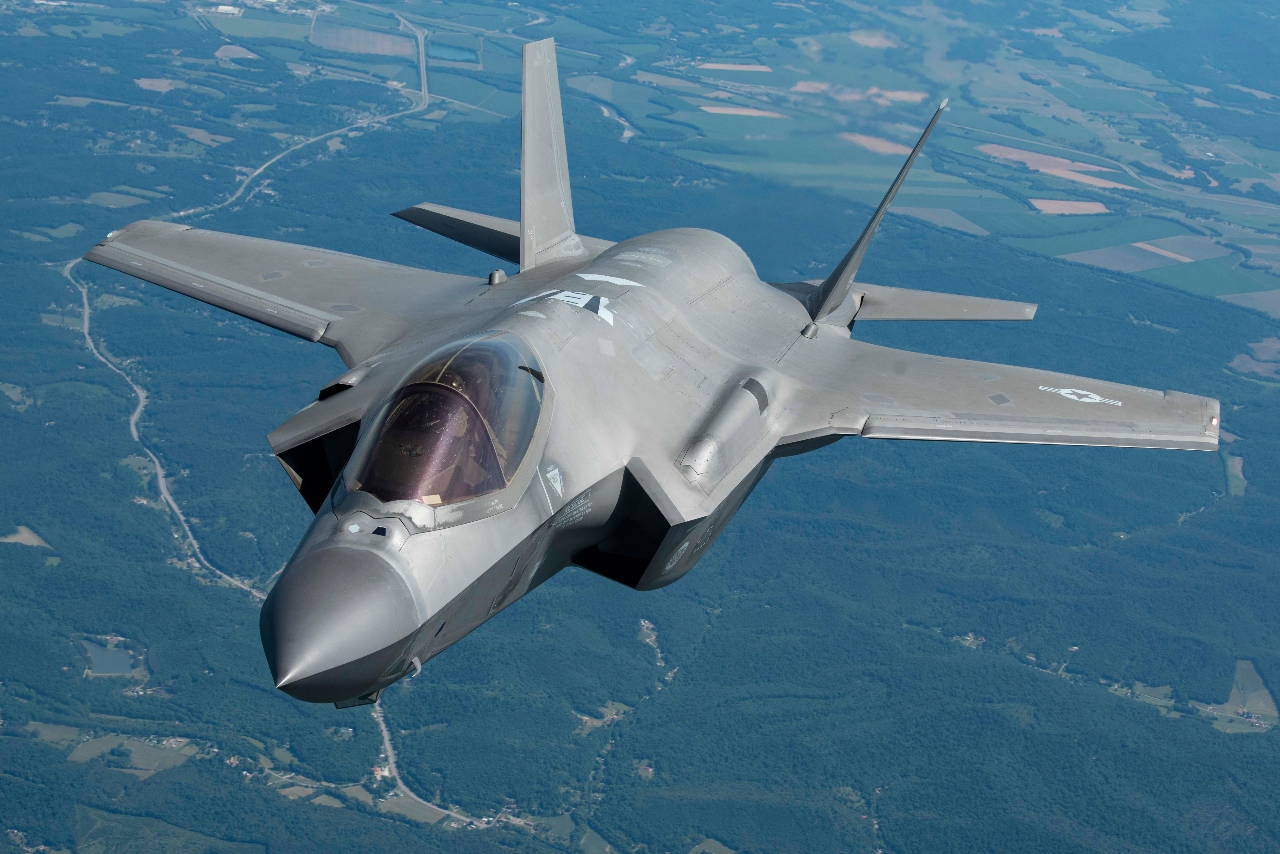
Finland gets first of its 64 world's most expensive fighter jet F-35A.Finland a plan to replace its older hornet fighters with these F-35A lightning II fighter jets.
Read More
Indo-US trade talks concluded with purposeful and positive engagements.
2025-12-13 04:29:17
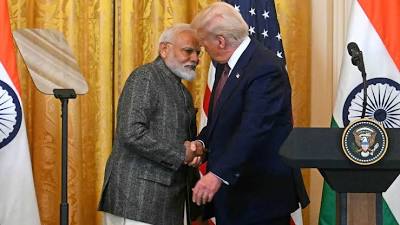
Indo-US trade talks concluded with purposeful and positive engagements on Thursday.
Read More
BJP MP Anurag Thakur questions Speaker Sri Om Birla "Have you allowed e-cigarette in the House?"
2025-12-12 12:25:10
BJP MP Anurag Thakur questions Speaker Sri Om Birla "Have you allowed e-cigarette in the House?"
Read More
PM Modi will be on a 3 -Nation Tour to Jordon,Ethiopia and Oman from 15 december onwards.
2025-12-12 12:06:59
PM Modi will be on a 3-Nation Tour to Jordan,Ethiopia and Oman from 15 december onwards.
Read More
Bangladesh Election commision announces General Election date.
2025-12-11 18:22:20
Bangladesh Election commision announces General Election date.
Read More
PM Modi calls President Trump.
2025-12-11 17:53:59
PM Modi calls President Trump.
Read More
US approved $1 billion helicopter deal with Saudi Arabia.
2025-12-03 15:44:42
US approved $1 billion helicopter deal with Saudi Arabia.
Read More
MIG-21 will no longer fly in Indian sky.
2025-12-03 15:23:19
MIG-21 will no longer fly in Indian sky.More than 6 decades defended India from enemies,this fighter jet will retire now.Many ex-pilot of IAF shows their bravery with MIG-21.The fighter jet was imported from USSR about 60 years before.
Read More
In SIR 2.0 list of documents will be checked in 12 states and Union Territories..
2025-12-02 15:08:59
In SIR 2.0 list of documents will be checked in 12 states and Union Territories.
Read More
Rejecting all concerns about Dubai air show HAL Chief says,Tejas is the safest.
2025-12-02 05:53:18
Rejecting all concerns about Dubai air show HAL Chief says,Tejas is the safest.
Read More
It is confirmed by Central Government that Delhi, Mumbai, Kolkata, Hyderabad, and Bengaluru airport hitted by severe cyber attack
2025-12-01 15:54:12
It is confirmed by Central Government that Delhi, Mumbai, Kolkata, Hyderabad, and Bengaluru airport hitted by severe cyber attack.The Government said that GPS spoofing was happened.
Read More
Russian President Vladimir Putin is expected to visit India next week after four years.
2025-12-01 14:05:46
Russian President Vladimir Putin is expected to visit India next week after four years.
Read More
After 'operation Sindoor' India's war strategy has changed.
2025-11-24 04:47:56
After 'operation Sindoor' India's war strategy has changed.
Read More
Russia has started delivering its most advanced fifth-generation fighter, the Su-57.
2025-11-24 03:55:06
Russia has started delivering its most advanced fifth-generation fighter, the Su-57.
Read More